Testing and scalingGuide
Plan clip reuse across ad concepts without repetition
Short answer
Plan clip reuse by the visual meaning of each beat, not just the number of distinct filenames. Track where clips appear across concepts, preserve useful recurring brand elements and vary openings, proof and reactions where they carry different ideas. Review the complete set for semantic repetition before generating new footage or treating a recut as a new concept.
Count ideas as well as files
A batch can contain many source files while repeatedly showing the same action, scene and explanation. Distinct filenames do not necessarily create distinct creative ideas. Plan reuse around the job each shot performs, and count distinct premises separately from the number of files available to render.
In our production in October 2026, library rotation and a persistent usage log help expose repeated beats. creative fatigue meta ads provides the fatigue context. This guide focuses on planning reuse across concepts, where the editorial question is what each shot means in its ad rather than simply whether the clip has appeared before.
A planner reviewing hypothetical lunchbox footage finds three useful angles of the lid opening. That is additional coverage of one action, rather than three separate concepts. The close view can explain the latch while the wide view establishes the kitchen. If another script concerns packing lunch, the missing asset is a packing action. Record that gap before ordering another angle of the same opening movement.
Track clip ID, source parent, concept, beat role and output versions. A shot can establish a setting in one ad and explain a mechanism in another. Record the actual use rather than giving the clip a permanent role that ignores context.
For a hypothetical workshop library, several angles of an owner looking at a bench may all communicate the same reaction. Group that semantic family so the planner sees the repeated idea. Meanwhile, one clip of a divider moving may carry unique proof that should not be replaced merely to increase file variety. Reuse planning balances continuity, evidence and distinct storytelling rather than applying a raw uniqueness count.
| Check | Suggested action |
|---|---|
| Register | Track concept and beat role |
| Meaning | Group semantically similar footage |
| Exception | Explain intentional reuse |
| Gap | Name the next useful shot |
Source: Turntake editorial checklist (proposed), October 2026.

Distinguish controlled variants from new concepts
A hook test can deliberately share an approved body. That is a controlled variant, not a failure of reuse planning. A new concept should offer a different question, situation or visual explanation instead of changing only the first line.
In our October 2026 production method, new angles and varied footage support a portfolio of ideas. Keep the test’s purpose in the usage record. If the goal is isolating an opening, preserve the body. If the goal is expanding the concept set, inspect the entire visual argument. Otherwise a blanket reuse rule can damage a useful controlled comparison while still allowing several superficially different ads to repeat the same story.
- 01Map clips to conceptsRecord actual beat roles
- 02Separate tests and conceptsPreserve intentional shared bodies
- 03Review semantic repetitionCompare openings, proof and endings
- 04Plan precise gapsGenerate only needed visual jobs
Use the library before generating a gap
Search the complete relevant library, including alternate takes and editor-selected material. A missing clip in one package does not establish that the source collection lacks it. Watch candidates against the present script before deciding they fit.

Our production in October 2026 starts from existing clips and generates only missing beats. Keep the gap description precise: a visible product action, a distinct opening or a readable real screen. Do not generate a generic replacement for a missing evidence shot. The new asset should solve the actual coverage problem, and its source record should enter the same usage log as reused material.
Rotate where repetition changes the experience
Creator reactions, generic mood shots and opening images often deserve deliberate variety across concepts. A brand screen or necessary mechanism shot may repeat because it provides continuity or evidence. Make that choice explicit instead of applying one limit to every category.
In our October 2026 library rules, brand screens and generic clips have different reuse expectations. A persistent log lets the next script consider prior selections rather than restarting from zero. Keep any numerical cap as an internal production choice, not a universal claim about audience tolerance. Review the assembled set to decide whether the visible repetition is helpful familiarity or an overused beat.
- Reuse reasonControlled hook testPlanning responseKeep approved body
- Reuse reasonBrand continuityPlanning responseRecord intentional recurrence
- Reuse reasonUnique real proofPlanning responsePreserve evidence shot
- Reuse reasonRepeated generic reactionPlanning responseFind a different visual idea
Inspect the batch without filenames
Watch openings side by side and summarize each visual premise. Then do the same for proof and endings. If several ads can swap those beats without changing meaning, the concepts may be closer than their labels suggest.
Hook rate vs hold rate: define what you measure covers attention measurements, which should retain their definitions and context. Pretest ads with synthetic personas: compare pairs covers synthetic pretests, useful for clarity questions rather than predicting outcomes. How many ad creatives? Plan useful variety first covers creative variety in observed tests. Keep each method separate from the editorial reuse review. A usage count identifies repetition; it does not prove that a repeated clip causes a particular audience response.
Keep an exception record and a next-shot plan
When a clip repeats intentionally, record why: controlled test, brand continuity or unique proof. When the repetition is undesirable, name the specific new visual job needed. That creates a useful next-shot plan instead of a vague instruction to “make more content.”
Turntake’s production approach describes Turntake’s production approach. This is a studio planning method, not a claim that a planned automatic reuse feature is already available.
For a hypothetical batch with three different workshop openings, inspect whether all three immediately return to the same owner reaction and identical explanation shot. The files differ, but the central experience may repeat. Preserve any required real demonstration, then vary the surrounding question or scene where that creates a distinct idea. The aim is a coherent set of useful concepts, with reuse serving the story rather than determining it by accident.
Distinguish a new angle from a new idea
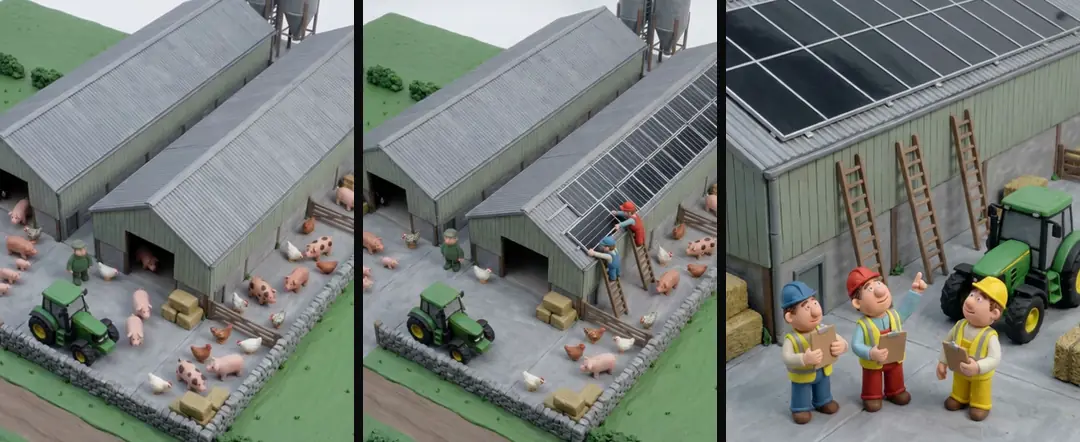
A new camera angle can improve clarity without creating another concept. Record that revision honestly. If the same product action answers the same question in the same scene, the batch still shares a central idea even when every file is newly rendered. A distinct premise needs its own explanation and supporting shots. This suggested review question helps the planner decide whether the next production task should collect better coverage for an existing concept or create material for a different story.
Who wrote this We made the ads first, for SmartSolar in Denmark, Sweden and Ireland. Then we built Turntake. Where Turntake comes from
FAQ
How should I plan reusable ad clips?
Plan clip reuse by the visual meaning of each beat, not just the number of distinct filenames. Track where clips appear across concepts, preserve useful recurring brand elements and vary openings, proof and reactions where they carry different ideas. Review the complete set for semantic repetition before generating new footage or treating a recut as a new concept.
How do I record the job each reused clip performs?
Track clip ID, source parent, concept, beat role and output versions. A shot can establish a setting in one ad and explain a mechanism in another. Record the actual use rather than giving the clip a permanent role that ignores context.
How do I distinguish controlled variants from new concepts?
A hook test can deliberately share an approved body. That is a controlled variant, not a failure of reuse planning. A new concept should offer a different question, situation or visual explanation instead of changing only the first line.
When should I generate a missing shot?
Search the complete relevant library, including alternate takes and editor-selected material. A missing clip in one package does not establish that the source collection lacks it. Watch candidates against the present script before deciding they fit.