The ad factoryGuide
Faceless AI ads for brands: show the useful action
Short answer
A faceless ad can use product views, hands, diagrams, screens, or animation instead of a speaking face. Start with the explanation and its evidence, then select shots for each role. Use real footage for product behavior and clearly illustrative imagery for context. A missing spokesperson does not mean a missing story.
An object demonstration may explain the product more clearly than an invented spokesperson. Build the ad around what the viewer needs to see, using real actions, diagrams, objects, or a coherent animation world where appropriate. Give each shot an evidence role and keep illustration separate from claims that require an actual product or person.
Choose the narrative point before the format
Write the question the ad answers in plain language. For a hypothetical desk organizer, it might be how separate compartments make a specific task easier to see. That point suggests a visible arrangement and an action, rather than a narrator’s personal backstory.
Choose a format only after the point is clear. A diagram can explain the arrangement; real footage can show the user action; animation can introduce the setting. ai ugc ads workflow covers the broader workflow. Calling the edit faceless should describe its presentation, not replace a creative brief with a list of stock scenes.
Assign each shot an evidence role
Label shots as context, explanation, demonstration, or next action. These are proposed planning labels. They help prevent a decorative visual from becoming accidental proof of a product claim.
In our production in October 2026, missing footage is sought in existing material first, then filmed, with artificial imagery used only where it can be honest. A slow move on a real packshot can present the product. An invented hand interaction should not establish a mechanism that no real footage shows. Keep those roles visible in the shot list.
| Shot role | Suitable question |
|---|---|
| Object view | Can the viewer identify the actual product? |
| Real demonstration | What action is visibly supported? |
| Diagram | What relationship does the drawing explain? |
| Animation | What context or metaphor does it establish? |
Source: suggested production checklist, October 2026.
Let the product provide the opening
Look for a clear state change, unusual shape, or recognizable use problem in the actual footage. The opening does not require a face if the object itself supplies a reason to watch. Avoid choosing a dramatic close-up that hides what the product is.
For the organizer example, an overhead view of the real compartments may establish the point faster than a wide room scene. Check whether the first crop still identifies the object at phone size. An opening can be visually distinctive yet fail if the viewer cannot understand what kind of thing they are seeing.
A latch explanation can work through the object and action alone. In a hypothetical plan, real footage shows the closing movement while a diagram clarifies the relationship between parts. Those materials perform different jobs: the diagram does not become another product demonstration. Keep the spoken statement within what the evidence supports, and request additional footage when a necessary action is missing rather than inventing a spokesperson to bridge the gap.
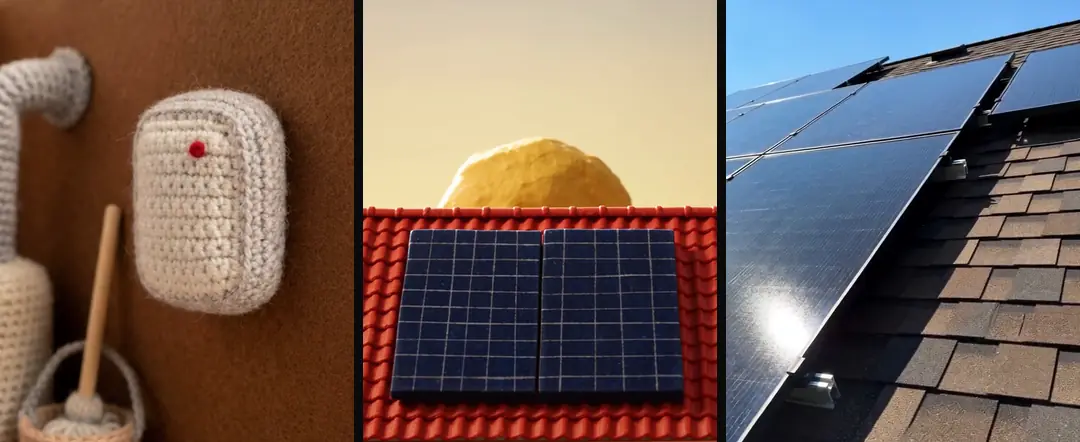
Write narration that follows visible actions
Describe what the picture supports, in the order the viewer sees it. A voice should not announce that a lid closes before the hand reaches it, or explain an internal feature that is never shown.
Keep the language concrete. Instead of a broad quality claim, name the visible part and the action it enables when the evidence supports that statement. AI static ads: a clear image before decoration covers static design for an opening or explanatory card. A card can state the point, but it should not replace the evidence needed for a product demonstration.
Use graphics to explain invisible relationships
A diagram can show order, comparison, or a process that would be hard to film directly. Label it as an explanation and keep the drawing faithful to the actual product information. Do not add a scale, number, or comparison merely to make the layout look authoritative.
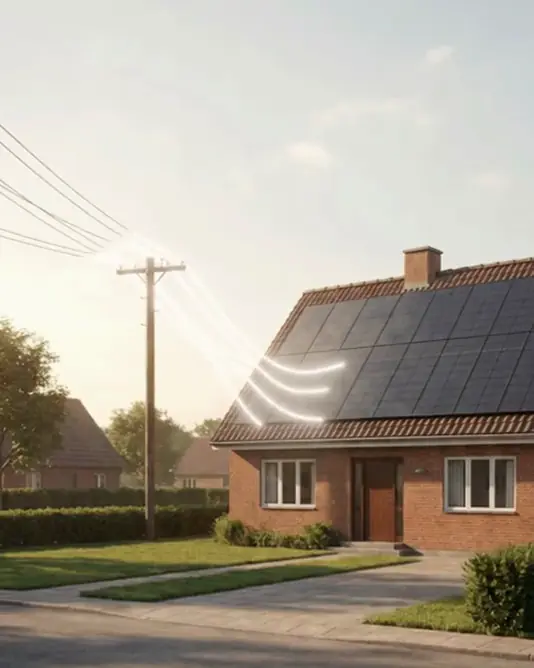
Reserve a calm region for text and keep labels close to what they identify. A diagram that requires pausing and tracing many arrows may be too dense for the intended beat. Reduce it to the relationship the current sentence needs, with additional detail placed in another shot only when the argument requires it.
- 01State the product pointOne question to answer
- 02Assign evidence rolesContext, explanation, demonstration
- 03Sequence visible actionsNarration follows the picture
- 04Check the closeLiteral next action
Keep sound useful without inventing a speaker
A voiceover can connect object shots while sound accents reinforce real actions. Music and sound effects for short video ads covers effects that land on motivated events. Listen for any effect that implies a physical behavior the picture does not establish, such as an exaggerated locking sound on a product that has not visibly locked.
A talking object is another creative choice, covered in Talking-object ads: give the product a clear role. It still needs an honest fictional role. Giving an object a voice does not turn a metaphor into product evidence. Decide whether the voice explains, jokes, or narrates, then keep factual statements within the same approved limits as any human narrator.
- IllustrationEstablishes a setting or metaphorProduct evidenceShows a real supported action
- IllustrationCan use a deliberate artificial worldProduct evidenceNeeds appropriate real source material
- IllustrationExplains the story’s contextProduct evidenceSupports the specific product statement
Check the edit without the voice
Watch with sound muted. Can the product point and intended next step still be followed from the picture and text? This is a practical clarity review, not a prediction of how every viewer will watch.
If the sequence becomes a collection of unrelated objects, improve the visual relationships. Show the relevant state before the action, maintain orientation, and make the next state readable. Captions can support the explanation, but they should not be the only source of meaning when the picture appears to demonstrate something different.
Make the closing action literal
Choose an ending that shows the real next action or states it plainly. A real screen, a product view, or a clean card may suit the close better than adding a last-minute artificial person. Give the viewer enough time to read it.
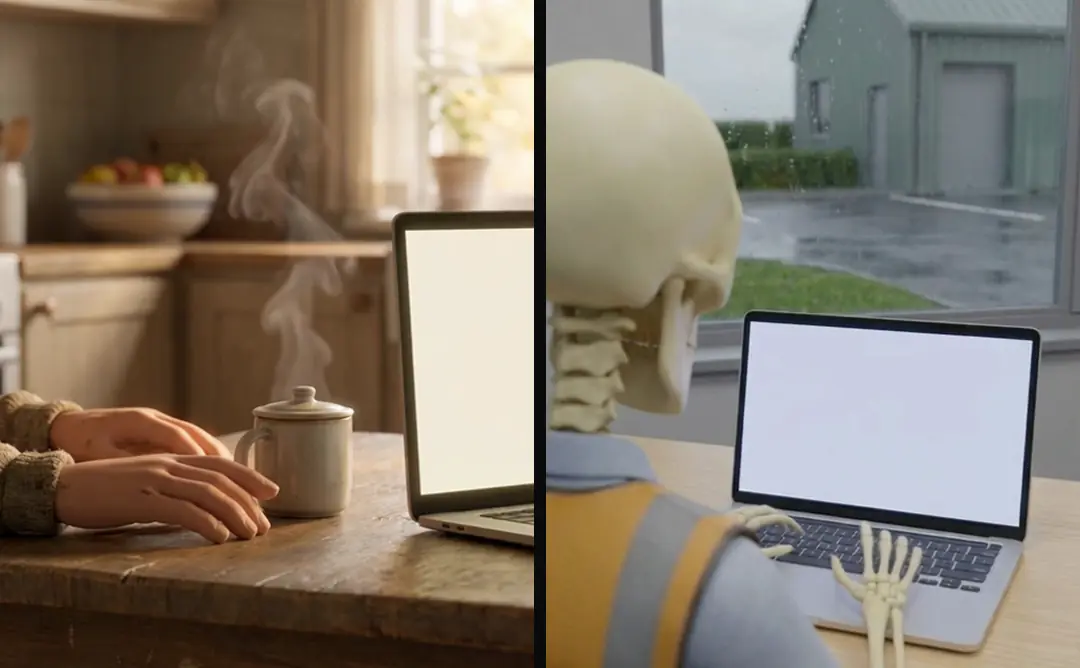
Save the evidence labels, source intervals, narration, and graphics with the edit. Turntake’s production workflow describes Turntake’s production approach. The next take can then change the opening or visual world while keeping the proof and action clear. A faceless structure succeeds editorially when the object and sequence carry the story with no invented personal endorsement.
Who wrote this We made the ads first, for SmartSolar in Denmark, Sweden and Ireland. Then we built Turntake. Where Turntake comes from
FAQ
Does a faceless ad need a narrator?
No. It can use visual actions and readable text when those carry the explanation. A narrator is useful when the sequence needs a spoken connection. Choose according to the message and evidence rather than treating voice as mandatory.
Can AI imagery demonstrate my product?
Use actual product evidence when the claim depends on physical behavior. Illustrative imagery can establish context or explain a relationship, but an invented interaction does not prove a mechanism. Label each shot’s role before assembling the edit.
What can replace a speaking face in the opening?
A recognizable product state, a clear action, or a useful diagram can provide the opening. Check that the crop identifies the object and its relevance. A striking image that hides the product may not support the intended explanation.
How should I review a faceless sequence?
Watch with sound, then without it. Check whether the pictured actions, text, and voice agree on the product point and next step. Keep source intervals and evidence labels so a later visual swap does not change the supported meaning.