The ad factoryGuide
Loudness for social video: measure the finished mix
Short answer
Measure the complete rendered mix for integrated loudness and true peak, then listen for speech clarity and the ending. Our −14 LUFS target is a house production choice, not a universal social-platform requirement or EBU target. Recheck after the final encode because the delivered file, rather than the timeline setting, is the result.
A loudness reading can pass while a key word disappears beneath the music. Measure the complete rendered mix, then listen to speech, effects, and the ending as separate checks. State the source of the production target and retain the measured file identity; a number copied from the timeline does not establish the delivered result.
Separate loudness from peak level
The EBU: R 128 distinguishes programme loudness from maximum true peak. Integrated loudness summarizes the programme over its duration, while true peak concerns signal maxima. Those measurements answer different questions; matching one does not establish the other.
For a short ad, keep the full mixed file as the measurement reference. A normalized voice source is not the same as the combined voice, music, and effects. Record the measured file identity, duration, and meter result so a later export cannot inherit a reading that belonged to an earlier audio version.
Label the production target accurately
In our production in October 2026, −14 LUFS is a house target. It is not an asserted rule from a social platform. EBU R 128’s broadcast recommendation uses a different target, described in the linked document, so do not cite EBU as requiring our value.
Choose the delivery target appropriate to the actual project and state its source. If the destination provides specific current requirements, check those independently. This guide explains our production workflow rather than assigning one loudness number to every service. A familiar number should not replace the destination review.
| Measurement or review | Question answered |
|---|---|
| Integrated loudness | What is the whole programme’s measured loudness? |
| True peak | What signal maxima does the meter report? |
| Speech audition | Are the words understandable in context? |
| Ending audition | Does the final sentence and bed finish intentionally? |
Source: EBU R 128 for measurement distinctions; suggested production checklist, checked October 2026.
Mix for intelligibility before normalization
Listen to the approved voice and add music beneath it. Check the densest sentence and any effect near a word onset. If the background masks speech, repair the balance or arrangement rather than expecting overall normalization to separate the layers.
Mix music under voiceover without losing the words covers music beneath voiceover. In our production in October 2026, listening alongside measurements mattered because a very quiet bed could become effectively inaudible in the finished context. The same principle applies in the other direction: an effect can be too prominent even when the whole programme is near the chosen integrated value.
In a hypothetical lamp ad, the report records a chosen house target without presenting it as a universal platform requirement. Measure the complete mixed output and retain its identity alongside the report. Then listen to the final adjustment instruction, where music or an effect might obscure a word even when the overall reading is acceptable. Measured values must come from the actual delivered file and its review.
Measure the complete rendered audio
FFmpeg’s FFmpeg: filters documentation documents loudness measurement and normalization filters, including integrated and true-peak targets. Use the relevant tool output as a report tied to the actual file, then review any processing decision before delivery.
Keep measurement and correction separate in the record. A first pass can identify the source characteristics; a processed output needs its own check. Do not copy the intended normalization value into a report as though it were measured. The useful evidence is what the output meter reports for the file that will be delivered.
Listen close to the ending
In our production in October 2026, music sometimes faded before the intended close. Our review therefore checks the final sentence and the bed near the end, rather than relying only on the whole-file reading.
Play the picture tail as well as the spoken line. Decide whether the final fade, held tone, or clean stop fits the ending. A correctly placed timeline fade can combine with a fade already present in the music source. The result may disappear earlier than intended even when neither source has an obvious error on its own.
- 01State the targetHouse choice or checked destination rule
- 02Mix for comprehensionVoice, music, effects
- 03Measure the final fileLoudness and true peak
- 04Listen through the endingThen record approval
Check small-speaker playback
Listen on a phone speaker and headphones at consistent, reasonable playback levels. The devices can reveal different problems: low music may disappear on a small speaker while sharp accents become distracting. Keep notes about the actual audible issue.
Do not compensate for every device by making the entire file louder. A competing instrument or an excessive effect may need a mix change. Recheck the full programme after that change because the measurement belongs to the combined result. The target is a repeatable production reference, not permission to ignore whether the explanation can be heard.
- Measurement evidenceWhole-programme loudnessListening evidenceClear words in the actual mix
- Measurement evidenceReported signal maximaListening evidenceBalanced effects on a small speaker
- Measurement evidenceTied to a file and meterListening evidenceTied to reviewed intervals and context
Recheck after encoding and other revisions
Measure the delivered encode and listen to it. A timeline meter or an intermediate WAV does not establish the final compressed file’s result. Preserve the original mix and the encoded version with matching IDs.
Color space in video ads: keep overlays consistent covers color-space consistency, a separate technical gate. Video ad export settings: check the delivered file covers export settings. Keep those checks associated with the same final version so a changed video export does not accidentally use a different audio mix. If the voice, music, effects, or duration changes, the earlier loudness report should be treated as historical evidence for that earlier file.
Deliver a concise audio review record
Record the target and its source, measured integrated loudness and true peak, file identity, and listening notes for speech and the end. List any remaining issue plainly. Avoid replacing the actual report with “audio normalized” when no output check has been performed.
ai ugc ads workflow gives the broader workflow, and Turntake’s production workflow describes Turntake’s production approach. The accepted result is the delivered file whose measurement and listening checks agree with the stated production decision. A number, a waveform, and a pleasing timeline preview each contribute different evidence; none alone completes the review.
Who wrote this We made the ads first, for SmartSolar in Denmark, Sweden and Ireland. Then we built Turntake. Where Turntake comes from
FAQ
Is −14 LUFS required by every social platform?
This article uses −14 LUFS as our house production target, not a universal platform requirement. Check the actual destination separately. Do not cite EBU R 128 as the source of that house value; its broadcast recommendation uses a different target.
Does integrated loudness tell me whether speech is clear?
No. It summarizes programme loudness, while intelligibility requires listening to the voice within the mix. Music or effects can mask a word even when the overall reading meets the target. Repair the balance and measure the revised file.
Do the displayed waveforms show final mix levels?
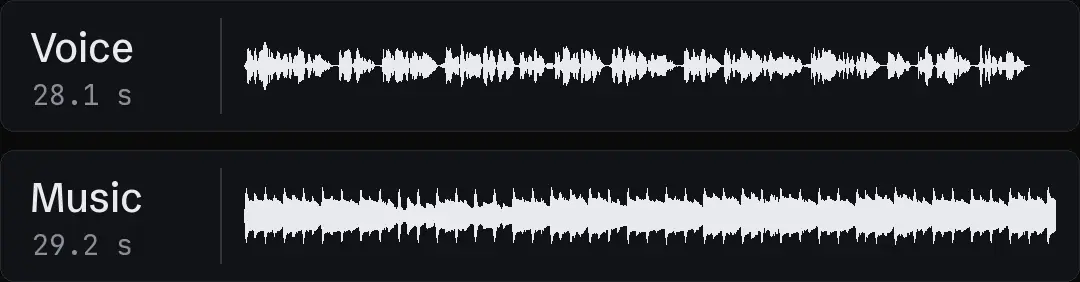
No. They show separate Voice and Music sources on one time window, including their endings. They help discuss timing but do not establish final loudness or balance. Measure and audition the complete rendered mix.
When should I measure again?
Measure the final encoded file and repeat after changes to voice, music, effects, or duration. Keep reports tied to file identities. A previous mix’s reading remains evidence about that version, rather than automatic approval for a new export.
Sources
- EBU: R 128 checked 11 October 2026
- FFmpeg: filters documentation checked 11 October 2026
Facts from the sources below were checked on the date shown. Pages change, so read the source again before you rely on it.