The ad factoryGuide
Mix music under voiceover without losing the words
Short answer
Mix music under voiceover by checking how the arrangement masks words, not just how loud the music meter reads. Start with a clean voice, choose a sparse bed and compare a steady level with deliberate ducking where useful. Listen on more than one playback device, then measure and review the complete final mix.
Make the voice understandable on its own
Before adding music, listen to the voice for clipped consonants, distracting pauses and inconsistent delivery. A bed cannot repair missing speech, and raising the whole mix can make the problem harder to hear accurately. Once the speech is usable, judge the bed by how it fits around the words as well as by its measured level.
In our production in October 2026, voice preparation precedes the final mix. ai ugc ads workflow covers the full workflow. This guide focuses on the relationship between a narration and its music, including why two tracks with similar loudness can compete with speech very differently.
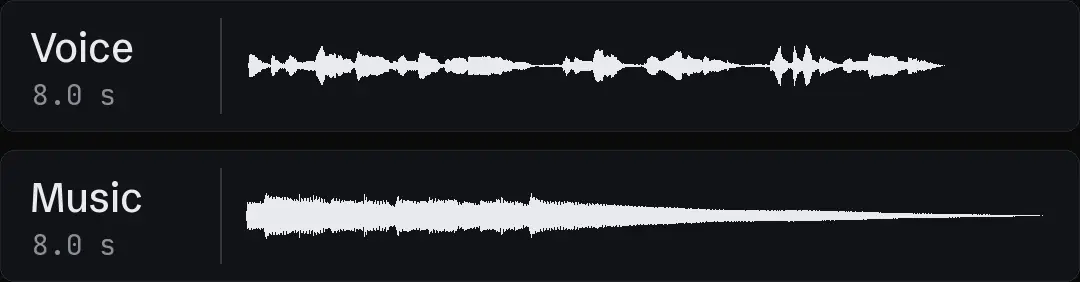
In a hypothetical assembly ad, the screw size is clear in the voice stem but difficult to hear when a guitar phrase arrives. That points the mixer toward the combined arrangement and balance, rather than rerecording an otherwise usable word. Compare a sparser passage or a restrained level change, then listen to the whole sentence. Measure the final mix afterward; neither a waveform shape nor the voice meter alone establishes intelligibility.
Listen for dense percussion, melodic activity and instruments that compete with the speaker’s rhythm. A sparse arrangement can remain audible at a useful level while leaving more attention for the narration. A busy bed may obscure words even after its level is reduced.
This is a proposed listening method, not a claim that one genre always works. Try the most difficult sentence first: a product name, a qualification or a rapid explanation. If the bed makes that sentence harder to understand, consider a different passage or arrangement before repeatedly lowering the entire track. The choice of music is part of intelligibility, not merely decoration applied after the voice is finished.
| Check | Suggested action |
|---|---|
| Voice | Establish intelligibility first |
| Bed | Consider arrangement density |
| Playback | Audition ordinary devices |
| Final | Measure after every mix revision |
Source: Turntake editorial checklist (proposed), October 2026.
Compare a steady bed with ducking
A steady bed gives a consistent background when the arrangement and speech already work together. Ducking reduces music during speech and can help when the voice needs more space. Listen to the transitions in level, because excessive movement can make the background feel distracting.
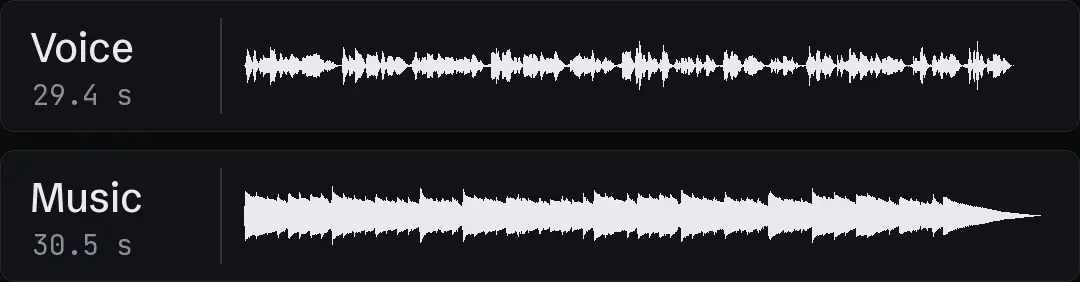
In our production in October 2026, our own ads use a constant low bed as a working choice. That is not a universal target for every recording. If you choose ducking, inspect the beginning and end of phrases so the music does not jump between short words or swell over a quiet qualification. The useful setting is the one that preserves the message in the actual mix.
- 01Check clean narrationResolve speech defects
- 02Choose sparse musicTest difficult sentence
- 03Compare level treatmentsInspect steady bed and ducking
- 04Review final mixListen and measure complete file
Keep the diagnosis tied to one sentence
The hypothetical assembly example separates a clear voice stem from a masking problem in the combined mix. It proposes comparing a different musical passage or a restrained level change, then listening to the whole sentence. It describes a review decision rather than a measured audio result.
Use meters for their defined measurement and listening for intelligibility. A waveform is not a transcript, and a lower-looking music shape does not establish a correct balance. Keep the actual voice asset, music asset and mix settings in the recipe. Then another editor can reproduce the chosen relationship instead of trying to infer it from an unlabelled preview or a remembered listening impression.
Listen on the devices the ad will encounter
Check a phone speaker, headphones and another ordinary playback system where available. Keep playback volume reasonable and consistent during comparisons. A mix that sounds clear on a detailed monitor can hide important consonants on a small speaker.

Pay attention to the opening, the densest explanation and the closing instruction. Do not assume that a clear first sentence validates the whole ad. If the bed changes arrangement halfway through, inspect that change against the voice. A drum entrance or melodic rise can create a local masking problem even when the average music level remains unchanged.
- SymptomWords masked throughoutPossible production responseLower or replace dense bed
- SymptomWords masked locallyPossible production responseAdjust musical passage or ducking
- SymptomMusic pumps between phrasesPossible production responseRevise ducking timing
- SymptomEnding loses energyPossible production responseInspect bed fade and source interval
Measure the complete rendered mix
In our production in October 2026, loudness is checked after voice and music changes, not inherited from an earlier voice-only file. The FFmpeg filter documentation describes audio measurement and processing filters. Confirm the selected tool’s units and inspect the final file.
Video ad export settings: check the delivered file covers export properties. Color space in video ads: keep overlays consistent covers color-space preparation, a separate visual responsibility that should not be confused with audio validation. Detect frozen frames in a video ad render covers frozen-frame detection, another independent gate. Keep the report tied to one output hash so the team knows the audio check and visual checks describe the same delivered file rather than different intermediate versions.
Preserve the ending and the mix recipe
Listen through the closing instruction and the last moment of music. A generated or selected bed may fade or change before the ad ends. In our October 2026 production observations, checking the music near the ending matters in addition to measuring the whole file.
Keep the selected source interval, gain choices, ducking treatment and fade timing in the recipe. Turntake’s production approach describes Turntake’s production approach. The hypothetical case describes a proposed listening workflow that an editor can apply to the actual source files and final mix.
For a suggested revision check, play the final qualification with music, then briefly compare it with the voice alone. If the words become noticeably harder to follow, identify whether the issue is level, arrangement density or a local musical event. Repair that cause and render another version. Avoid changing the voice wording simply to accommodate an unsuitable bed when the approved statement can remain clear with a better musical choice.
Compare stems at a difficult phrase
For a hypothetical mechanism sentence, listen to voice alone, then voice with the selected bed at the intended mix setting. Keep the same playback volume for both. If one consonant disappears only with music, inspect the musical event at that moment. Lowering the entire bed may work, but another passage or less dense arrangement may preserve both music and speech more naturally. Save the selected solution in the recipe so the next revision does not reopen the balance by guesswork.
Who wrote this We made the ads first, for SmartSolar in Denmark, Sweden and Ireland. Then we built Turntake. Where Turntake comes from
FAQ
How should I mix music under a voiceover?
Mix music under voiceover by checking how the arrangement masks words, not just how loud the music meter reads. Start with a clean voice, choose a sparse bed and compare a steady level with deliberate ducking where useful. Listen on more than one playback device, then measure and review the complete final mix.
How do I choose a bed with room for the words?
Listen for dense percussion, melodic activity and instruments that compete with the speaker’s rhythm. A sparse arrangement can remain audible at a useful level while leaving more attention for the narration. A busy bed may obscure words even after its level is reduced.
How do I compare a steady bed with ducking?
A steady bed gives a consistent background when the arrangement and speech already work together. Ducking reduces music during speech and can help when the voice needs more space. Listen to the transitions in level, because excessive movement can make the background feel distracting.
What does the mix example show?
The hypothetical assembly example separates a clear voice stem from a masking problem in the combined mix. It proposes comparing a different musical passage or a restrained level change, then listening to the whole sentence. It describes a review decision rather than a measured audio result.
Sources
- FFmpeg: Filter documentation checked 11 October 2026
Facts from the sources below were checked on the date shown. Pages change, so read the source again before you rely on it.