The ad factoryGuide
Spoken scripts vs captions: keep two text tracks
Short answer
Keep one approved standard script for readers and a separate spoken form for pronunciation. Map both to the same meaning and the actual voice timing. Expand numbers or abbreviations only where the voice needs it, keep captions normally spelled, and fix audio errors rather than displaying a different claim over them.
A pronunciation repair can become a visible typo when speech input is copied directly into captions. Maintain separate text for the voice and the reader, linked to the same approved meaning. After the audio is accepted, map readable spelling onto its timing and review both tracks so neither silently changes the statement.
Establish the standard script first
Write the version a reader should see, with normal product spelling, punctuation, and numeric presentation. Mark claims and conditions that must survive later revisions. This is the approved meaning reference.
In our production in October 2026, the standard script remains separate from the pronunciation input. That distinction lets the voice receive an expanded number while the caption retains a readable form. It also gives reviewers a stable text to compare with the actual spoken take. Do not make a transcript of a flawed generation the new authority merely because it is easier to align.
Derive a spoken form deliberately
Expand abbreviations and write numbers in words where needed by the selected voice. Use pronunciation aids only for the input that needs them. Keep each changed item associated with its standard spelling.
For a hypothetical product called “FoldBox,” a pronunciation aid might be tested separately while captions retain the approved name. The aid is a production instruction, not a new brand spelling. A local-language reviewer should assess the actual sample. The right input depends on the selected voice and model, so the mapping should record what was tested rather than claim one spelling works everywhere.
| Text item | Standard track | Spoken track |
|---|---|---|
| Product name | Approved reader spelling | Tested pronunciation input |
| Number | Normal readable form | Expanded words if needed |
| Abbreviation | Approved display form | Letters or full phrase as intended |
| Condition | Complete approved meaning | Same condition spoken clearly |
Source: suggested production checklist, October 2026.
Keep a mapping instead of two unrelated documents
Associate the corresponding sentences and changed terms. Give the approved script a version, then link the spoken form to it. A revision should identify whether it changes pronunciation only or changes the actual wording.
Without that link, a later editor can correct one document while leaving the other stale. A product name may be fixed in captions but remain wrong in the voice request. A condition added to the written script may never reach the audio. The mapping makes these differences visible before rendering and gives the next reviewer a precise comparison.
A hypothetical product name needs a reading adjustment, but that adjustment belongs to the voice input rather than the visible caption. Keep the approved normal spelling in the reader track and link it to the accepted spoken interval. Review both forms together after the audition. This preserves the intended name while making the pronunciation decision traceable, instead of allowing a phonetic spelling to become an accidental caption error.
Align captions to the accepted audio
In our production in October 2026, the voice file is transcribed for word timing, then normal script spelling is mapped onto those intervals. The timing comes from speech, while the text comes from the approved readable form.

Handle merged and split words deliberately. If a product name is recognized as two tokens, its written form may still occupy one caption item spanning the relevant interval. Do not discard spoken time merely to make token counts match. SRT vs WebVTT for video ad captions explains caption-file choices once the mapped text and timing are ready for delivery.
Repair meaning errors in the voice
If the audio omits a condition or says a wrong amount, the caption cannot quietly supply the intended statement. Review and repair the audio. The two tracks may differ in spelling format, but they should not contradict each other.
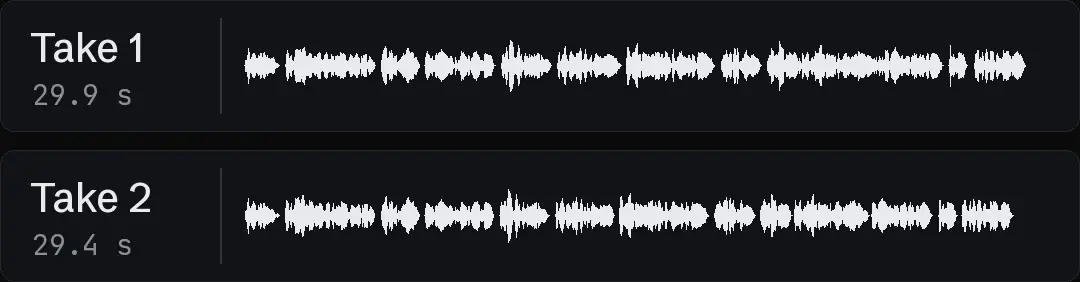
Keep an error note that states what was actually heard and what the approved script requires. A transcript can help locate the interval, but listening remains necessary. An automatic recognizer may normalize a number or unfamiliar name in ways that hide a problem. The acceptance decision belongs to the real voice file and the approved meaning.
- 01Approve the standard scriptOne meaning reference
- 02Derive the spoken formMapped pronunciation changes
- 03Approve the actual voiceCorrect words and conditions
- 04Map readable captionsAudio-based timing
Preserve the mapping across language versions
Create each language’s approved standard script before deriving its spoken input. Keep the relationship to the original meaning explicit, while allowing natural wording and number presentation in the target language.
A translated line may have a different length. Do not preserve the original timestamp grid at the expense of the new speech. Fix caption drift from the first word to the last covers caption drift when timing changes. Rebuild alignment against the accepted target-language audio, and keep language-review notes with the version so a later wording revision does not silently undo an approved pronunciation.
- Standard reader textNormal product spellingSpoken production inputTested pronunciation aid
- Standard reader textReadable number formatSpoken production inputExpanded number if needed
- Standard reader textApproved displayed conditionSpoken production inputThe same condition spoken clearly
Review layout after the text is correct
Normal spelling may be longer or shorter than the phonetic input. Test the actual caption groups at the intended phone crop. Keep names and conditions readable without shrinking the entire track to accommodate one difficult line.
Vertical video safe zones: review the final crop covers safe-zone review. The relevant question is whether the final text and product action remain visible together. A caption with perfect spelling and timing can still hide the evidence. Keep layout changes separate from script changes so a request to move the box does not become an accidental wording revision.
Deliver both text tracks with the voice
Package the approved standard script, spoken input, term mapping, accepted voice ID, word times, and caption groups. Include the version relationship and any unresolved terms. The editor should know which text belongs on screen and which exists only to guide pronunciation.
ai ugc ads workflow gives the overall workflow, and Turntake’s production workflow describes Turntake’s approach. Two explicit tracks reduce ambiguity when a name, number, or language changes. Their purpose is one truthful statement delivered clearly to ears and eyes, with enough evidence to inspect both when the next take is made.
Who wrote this We made the ads first, for SmartSolar in Denmark, Sweden and Ireland. Then we built Turntake. Where Turntake comes from
FAQ
Why not use the voice input as captions?
Pronunciation input may contain expanded numbers or unusual spellings intended only for speech. Captions should use the approved reader-facing form. Keep a mapping so both express the same meaning while serving their different production roles.
Can captions correct a wrong spoken number?
Repair the audio when it says the wrong amount. Displaying the intended number over contradictory speech leaves two different claims in the same ad. The tracks may differ in formatting, but their factual meaning must agree.
Which text supplies caption timing?
Timing comes from the accepted audio, not from the script document. Map normal written spelling onto the spoken intervals. Handle merged or split tokens explicitly so a readable name retains the full time occupied by its pronunciation.
What should I deliver with the two scripts?
Include the approved standard version, spoken input, term mapping, accepted voice, word times, and caption groups. State which text is reader-facing. These records let a later editor revise pronunciation without copying phonetic spellings onto the screen.