ModelsGuide
Speech to text for captions: time every word
Short answer
Word-level captions need two approvals: the words must be correct, and their timestamps must follow the approved audio. Transcribe the actual voice file, map the standard script onto its spoken words, group readable phrases, and inspect the opening, middle, and close. Timing data is a starting point for review.
Accurate words can still make poor captions when they arrive late or flash past individually. Align against the accepted audio, preserve readable spelling, and group the timed words into phrases the viewer can follow. Inspect the beginning, dense middle, and ending after every audio change so a correct transcript becomes a usable caption track.
Use the audio that will actually ship
ElevenLabs’ ElevenLabs: transcription documents transcription output with word information and timing. That provides useful alignment data, not an editorial approval of every word. Run it against the approved voice file after any pause trimming or voice changes.
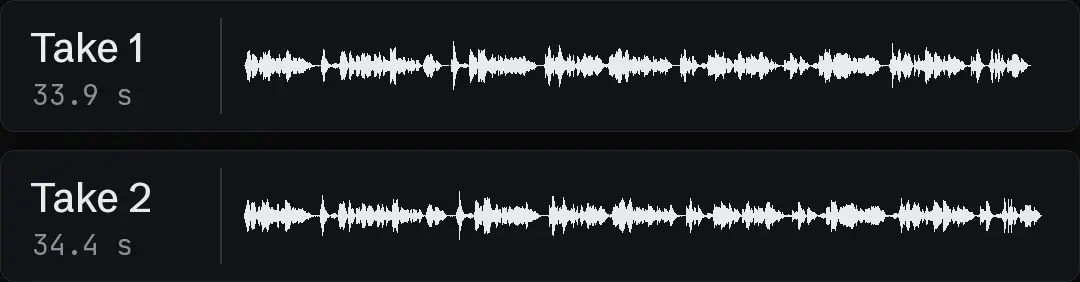
A script document has no knowledge of the final delivery. Even when the text is unchanged, a new take can move its pauses and stress. Record the audio file ID with the timestamp output. This simple association prevents a carefully edited caption track from being applied to a different take that happens to share the same filename prefix.
Separate word identity from its time interval
In our production in October 2026, one simple word representation carries text, start, and end through captioning, clip planning, and retiming. Tools later in the chain do not need to know which transcription service supplied it.
Keep punctuation identifiable without treating a comma as an independently spoken sound. Check that word intervals follow the audio in order and that no word extends beyond the file. A missing word is a text issue; an interval that starts late is a timing issue. Record them separately so a spelling repair does not accidentally move an otherwise correct timestamp.
| Check | Question |
|---|---|
| Text accuracy | Did the speaker say this word? |
| Word alignment | Does the interval cover the audible word? |
| Phrase grouping | Can the group be read naturally? |
| Layout | Does the group fit the final crop? |
Source: suggested production checklist, October 2026.
Map the approved spelling onto the speech
A transcription service may split a brand into multiple words or normalize a number differently from the approved script. In our production in October 2026, captions use the standard written form mapped onto the audio’s word times.
Resolve those mappings deliberately. A product name written as one word may occupy several recognized tokens. Associate the complete name with the combined spoken interval rather than dropping part of the audio. If the speaker actually said a wrong amount, correct the voice instead of displaying the intended amount over incorrect speech. seedance vs kling vs veo gives the wider production context.
In a hypothetical handle instruction, the line moves earlier when its preceding pause is shortened, even though the written script remains unchanged. Align against the accepted edited voice and retain the normal spelling, then group the phrase for reading. Review its arrival with the actual action and speech rather than trusting an old timestamp map. This example distinguishes word identity, spoken timing, and caption grouping so each can be revised without silently changing the others.
Group phrases for a reader
Build small reading units around meaning and punctuation. Keep a name with the phrase that identifies it. Avoid putting a negation at the end of one group and the claim it changes in the next; a viewer may briefly read the wrong meaning.
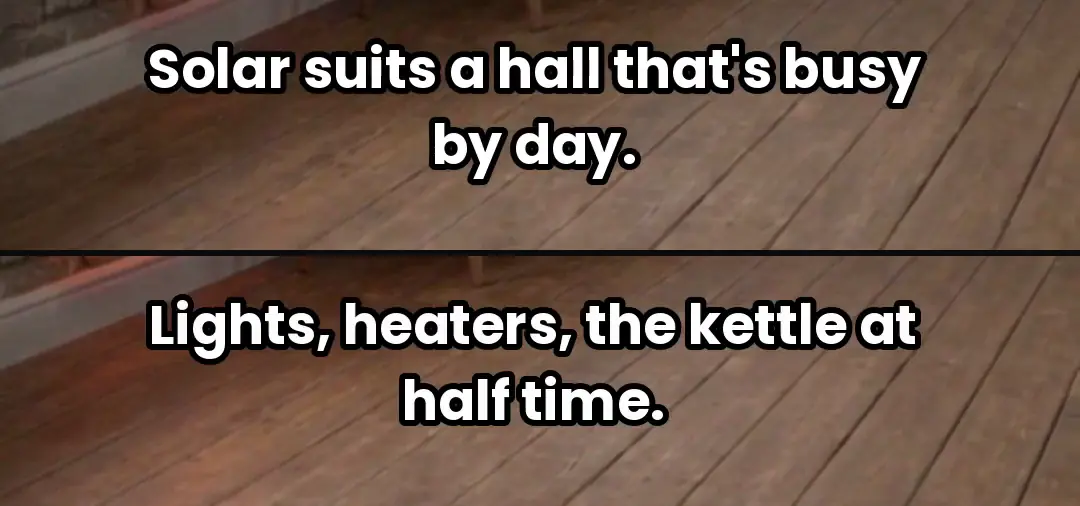
Try the groups at the intended phone size. A technically valid interval can still contain too many characters. Splitting the group is often better than shrinking the type. Do not assume word-by-word highlighting requires one word per caption box. The visual group and the individual highlight times can be different layers of the same caption track.
Apply any early offset as an explicit house choice
Our documented caption practice allows a small early display offset so a group is ready as its words arrive. Treat that as our production choice, not a transcription-provider recommendation or a platform requirement. Keep the offset visible in the recipe rather than baking unexplained adjustments into every timestamp.
Test the offset with short words and pauses. A caption that appears during a meaningful silence can disclose the next point too early. If the offset improves a dense line but harms the opening, review the affected group rather than treating a single global value as proof that the whole track is synchronized.
- 01Identify the approved audioKeep its file ID
- 02Align wordsReview text separately
- 03Group readable phrasesPreserve meaning
- 04Inspect three regionsOpening, middle, close
Inspect the beginning, middle, and end
Watch at normal speed and listen without relying on the written script. At the opening, look for a delayed first word. In the middle, inspect a dense sentence and a transition. At the close, make sure the final action line has time to be read after the last spoken word.

Then review any interval where audio was edited. An internal pause removal can produce a sudden alignment change while the rest of the track remains correct. Note the first affected group. A constant offset and an accumulating drift suggest different repairs; repeatedly nudging the complete track can conceal the original cause.
- Text problemWrong product spellingTiming problemCorrect word appears late
- Text problemMissing spoken wordTiming problemInterval uses the old voice
- Text problemIncorrect number in audioTiming problemGroup lasts past its spoken phrase
Rebuild timing when the voice changes
A new voice should trigger alignment, not merely reuse the old caption times. The visual edit may be retained by mapping its beats to the new word positions, but captions must still follow the new file. Keep a copy of the old map to explain the changes.
If a video-model experiment changes a shot but leaves the audio intact, the word map can remain. Kling for ads: a shot test based on its docs, Veo for ads: plan shots and generated sound, and Hailuo for ads: image-to-video shot planning describe visual routes that should be judged independently of caption accuracy. This distinction avoids rerunning audio work for a purely visual edit while still catching actual timing changes.
Deliver editable text and evidence
Save the standard script, word map, caption groups, audio ID, and any manual corrections. Include a short list of reviewed intervals. Another editor should be able to see that the name spelling was changed intentionally and that its timing still comes from the spoken take.
Turntake’s models plan describes the planned model connection. Word timing here is a studio method, not a claim that every uploaded clip is automatically aligned and approved in Turntake. The deliverable is a traceable caption track whose text, time, and layout can each be inspected when the next take changes.
Who wrote this We made the ads first, for SmartSolar in Denmark, Sweden and Ireland. Then we built Turntake. Where Turntake comes from
FAQ
Does a correct transcript mean captions are synchronized?
No. Text accuracy and time alignment are separate checks. Inspect whether each group follows the actual approved voice, especially after pause edits or a new take. A transcript can contain the right words with unsuitable display timing.
Should every caption contain one word?
No. Group words into short readable phrases while retaining individual timing for emphasis when needed. Keep meaning intact and test the layout at phone size. One-word boxes can make a connected explanation harder to read.
Can I reuse caption times for a new voice?
Align the new audio again. The same script can have different pauses and word lengths in another take. You can map existing edit beats to the new voice, but unchanged written wording does not establish unchanged timing.
What files should I keep?
Keep the approved audio ID, standard script, word timestamps, phrase groups, and manual corrections. Record any early offset as a recipe setting. Together these files explain both what the viewer reads and why it appears when it does.
Sources
- ElevenLabs: transcription checked 11 October 2026
Model facts come from each maker’s own documentation, checked on the date shown. Models change, so read the source again before you plan a batch.