ModelsGuide
Set a voiceover word budget before the video cut
Short answer
Set the word budget from a recorded sample of the selected voice reading similar copy. Reserve time for pauses, demonstrations, and the closing action before estimating how much text fits. Numbers and unfamiliar terms can change pace. Recheck each language and final take rather than relying on a universal words-per-minute rule.
Too many words leave no room for the product action to finish. Estimate the spoken duration early, read the draft aloud, and reserve time for explanation, pauses, and the close. Treat the budget as a planning tool for meaningful speech and picture rather than a target that rewards the fastest possible delivery. The model selection guide places the voice asset within the complete still, motion and edit workflow.
Measure a relevant sample
Choose the voice and a passage similar to the planned ad. Include the kind of names, numbers, and explanations the final script will contain. A casual greeting is a weak pace sample for a dense product explanation.
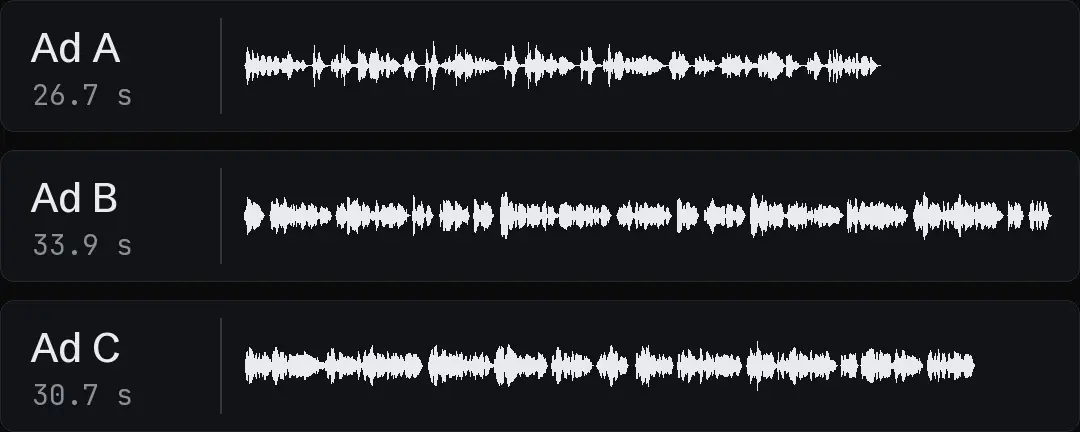
Time the actual approved reading, including natural pauses. Keep the sample file with the estimate so another producer can understand the basis. In our production in October 2026, number-heavy business scripts read more slowly in the selected voice than a simple word-count assumption suggested. That is a dated observation about our material, not a fixed rate for every voice or script.
Reserve time that is not continuous speech
List demonstration pauses, picture-only moments, and the closing reading allowance. Subtract them from the intended duration before estimating text capacity. A script that consumes the whole timeline leaves no room for the viewer to inspect the object.
For a hypothetical lid demonstration, the voice may need to pause while the hand completes the movement. Treat that pause as part of the explanation, not wasted time. The final action also needs room to remain readable after the spoken line ends. A word budget should protect those intervals rather than force the editor to remove them.
| Budget item | What to estimate from |
|---|---|
| Spoken explanation | Relevant sample from the selected voice |
| Action pause | Time needed to see the real demonstration |
| Closing line | Actual wording and delivery |
| Picture tail | Required reading and comprehension time |
Source: suggested production checklist, October 2026.

Count spoken words, not only typed tokens
A number, domain, or abbreviation may expand into several spoken words. Keep a standard reader-facing script and a separate spoken form. Use the spoken form for the estimate so a short-looking line does not hide a long pronunciation.
Count after the actual expansions are chosen. If the brand name is spoken differently from its display spelling, include the intended spoken length in the audition. A simple character count cannot capture pauses or emphasis either. Use the count as a planning aid and the real voice file as the final evidence.
In a hypothetical filter demo, the action sets a useful constraint for the spoken draft: the viewer must follow insertion, the turn, and the completed position. A repeated setup sentence uses time without improving that explanation. Remove the repetition, read the connected instruction aloud, and compare it with the full action rather than forcing the fastest delivery. The example makes the word budget a decision about meaning and coverage, not a universal words-per-second rule.
Draft below the estimated limit
Leave room for natural phrasing and revisions. A first draft exactly at a calculated ceiling tends to become crowded when a reviewer adds a necessary condition or a name needs slower pronunciation. Treat the estimate as a working boundary, not a target to fill.
Remove repeated setup before cutting essential evidence. A sentence that restates the product point may be expendable; a condition that makes the claim true is not. Read the shortened version in sequence. The remaining lines should still carry context rather than become disconnected fragments chosen only because they use fewer words.
Audition the complete script
Generate or record the full candidate and listen to it without the picture. Check names, number groups, and the final action. A script can fit the duration while sounding rushed or placing pauses in the wrong places.
Choose an AI ad voice with a useful audition covers a useful voice audition. Select the take on comprehension and appropriate delivery, then measure its actual timing. If it exceeds the intended interval, diagnose whether the problem is extra wording, long pauses, or an unrealistic visual plan. Do not assume that increasing speed is the only way to make the draft fit.
- 01Record a relevant sampleChosen voice and copy type
- 02Reserve visual timePauses and closing allowance
- 03Count the spoken formNumbers and names expanded
- 04Audition the full scriptUpdate the edit timing
Recheck language versions independently
A translated line may need different word order or more explanation. Use a reviewer who understands the target language and audition the actual voice. Matching the original word count does not establish matching duration or natural phrasing.
In our production in October 2026, language review and a short voice sample precede generation for languages we do not speak. Keep each version’s budget tied to its own sample. Preserve the approved meaning across languages, but allow the cut to respond to the real delivery rather than forcing every sentence into identical timestamp slots.
- Planning estimateUses a relevant voice sampleFinal timing evidenceUses the accepted complete take
- Planning estimateReserves action and reading timeFinal timing evidenceShows actual pauses and word lengths
- Planning estimateHelps limit the draftFinal timing evidenceDetermines the cut’s real timing
Use pacing repairs in the right order
Fix voiceover pacing without breaking the edit distinguishes text revision, pause editing, and beat placement. Start by removing redundant language, then address unnecessarily long pauses without damaging consonants. After the voice is approved, map the visual beats to it.
If a speaking visual cannot support the new timing, select a suitable production route. Seedance face detected: the route from our tests describes a provider-specific refusal decision and the separate portrait-and-voice approach used in our production. That is relevant as a route choice, not as evidence about the appropriate speaking rate. Keep word budgeting independent of model-policy assumptions.
Carry the budget into the edit record
Save the sample, spoken count, reserved intervals, approved take, and final word map. If the script changes, update the estimate rather than leaving a stale count in the brief. If the voice changes, measure again.
Turntake’s models plan describes the planned model connection. The budget is a production aid, not automatic proof that text will fit a video. The accepted take should leave enough room for the viewer to hear the explanation, see the demonstration, and read the closing action without the editor having to invent time after the fact.
Who wrote this We made the ads first, for SmartSolar in Denmark, Sweden and Ireland. Then we built Turntake. Where Turntake comes from
FAQ
Is there one word rate for all voiceovers?
No. Delivery depends on the voice, language, wording, names, numbers, and pauses. Measure a relevant sample and audition the complete script. A general word-rate estimate can help planning but should not replace the actual approved take.
Should I count digits as one word?
Count the spoken form used in the voice input. A typed number or abbreviation may expand into several spoken words. Keep that form separate from normal caption spelling, then measure the resulting delivery rather than trusting the typed count alone.
Why leave unused time in the draft?
The viewer needs time for demonstrations, pauses, and a readable close. Necessary conditions or pronunciation changes may also lengthen the final take. A draft below the estimate leaves room for clarity without forcing rushed speech or unsupported omissions.
Can I use the same budget for every language?
Use each language’s actual reviewed text and voice sample. Similar meaning does not imply equal length or pacing. Preserve the claim, then adapt the cut to the approved delivery instead of forcing a translation into the original timing.