ModelsGuide
Choose an AI ad voice with a useful audition
Short answer
A useful voice audition keeps the sample text fixed while comparing comprehension, pronunciation, tone, and fit with the picture. Include the difficult words the ad will actually use and ask a fluent reviewer to listen. Choose an approved take rather than declaring a universal winning voice from an undocumented listener test.
A pleasant sample greeting tells you little about how a voice will explain your product. Audition the actual script against its character, visual world, difficult words, and closing action. Compare complete thoughts at a consistent listening level, then preserve the chosen take and its settings so the edit has a stable timing reference. The model selection guide places voice alongside the other assets that must work together in an ad.
Write a sample that represents the ad
Include the product name, a typical explanation, a number if the script needs one, and the closing action. Keep the sample short enough to compare without losing attention, but long enough to reveal sentence flow.
Use identical wording for each candidate. If one voice receives an easier sentence, a preference may reflect the text rather than the voice. Keep a normal written script and a spoken input version where pronunciation requires it. The audition should test the kinds of difficulty present in the final ad, not avoid them to make every candidate sound polished.
Listen for comprehension before character
Can the listener understand the sentence without reading along? Check missing words, awkward stress, and phrases that sound merged. A striking timbre is less useful if the product point needs repeated listening.
In our production in October 2026, speech-to-text comparison helps identify differences from the script. It remains a diagnostic: a matching transcript does not prove clear pronunciation. Listen to the actual intervals and preserve the observation. Write “product name unclear on first listen” rather than replacing a concrete concern with a vague overall voice score.
| Audition dimension | Suggested question |
|---|---|
| Comprehension | Is the point understood without the script? |
| Pronunciation | Are names and technical terms correct? |
| Tone | Does the delivery fit the message? |
| Picture pairing | Does the voice match the character’s energy? |
Source: suggested production checklist, October 2026.
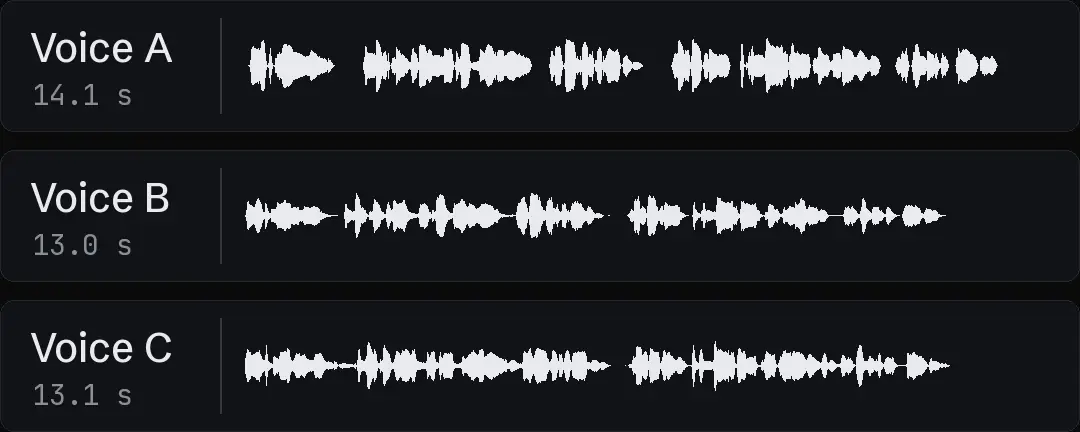
Give pronunciation its own decision
Check the difficult words in their complete sentence. A name may sound correct alone but lose clarity between two stressed words. Ask a fluent reviewer to judge both correctness and appropriateness for the target language.
Keep the approved reading with the model and voice identifiers used to make it. Do not carry an approval to another model without a new sample. This article avoids assigning vendor-specific dictionary support; the exact request documentation determines those options. The casting record should simply state what was listened to and which pronunciation was accepted.
A parcel-locker instruction exposes qualities an isolated greeting cannot: sequence, emphasis, and the clarity of a specific handle reference. Use the same complete line for each candidate and listen at a consistent level. A reviewer can then explain whether the delivery guides the action or distracts from it. Preserve the accepted take and identifiers before timing the picture, since changing the voice later may move every visual beat.
Pair the voice with the actual visual
Play the sample under the intended character or representative shot. A warm, restrained voice can feel disconnected from an exaggerated expression, while an energetic read may overwhelm a quiet scene. Review the pairing rather than treating face and voice as unrelated approvals.
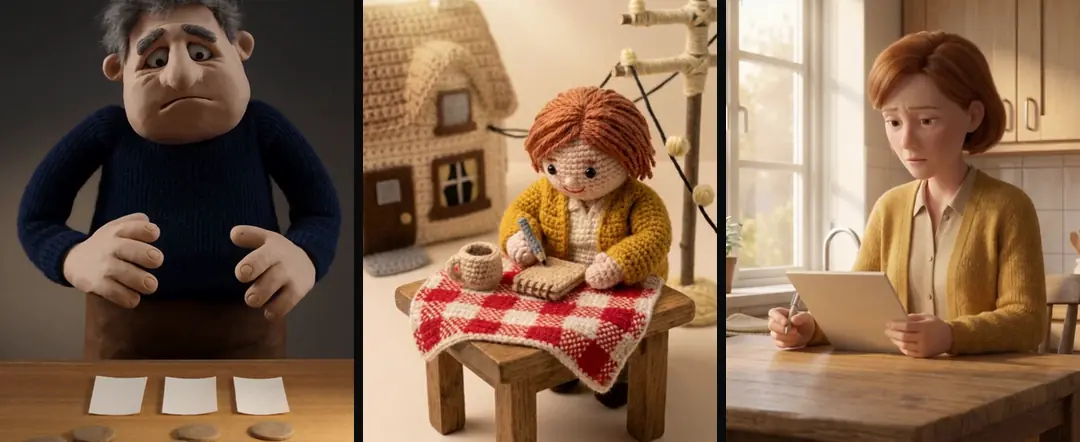
In our production in October 2026, the same voice could work differently when paired with another face and script. That qualitative observation supports a pairing check; it does not establish a ranked list of voices. If the mismatch is visual, revise the shot or casting relationship rather than rejecting the voice universally.
Ask reviewers focused questions
Request a specific decision on understanding, pronunciation, and tone. Separate “I prefer this sound” from “the product name is wrong.” Both can matter, but they require different next steps.
For languages the team does not speak, use a qualified language review rather than relying on confidence in the generation prompt. In our production in October 2026, that review and a short sample precede later generation. Do not describe the outcome as a listener study unless such a study actually exists with documented methods and participants.
- 01Use one sample scriptInclude real difficult words
- 02Listen for correctnessComprehension and pronunciation
- 03Pair with the pictureTone and energy
- 04Save the accepted auditionIDs and reviewer decision
Check pace against the intended cut
A clear voice can still need more room than the current edit provides. Fix voiceover pacing without breaking the edit covers repairs that distinguish rewriting from pause work and beat placement. Avoid approving a take only because it is the shortest.
Measure the full candidate and allow time for the visual demonstration and close. If the editor has to remove an essential condition to fit the voice, the problem is the plan. Keep the approved meaning and find the appropriate timing or wording revision. A fast audition is not evidence that the final explanation remains understandable.
- Preference observationI prefer this toneCorrectness observationThe product name is unclear
- Preference observationThis energy suits the sceneCorrectness observationA word is missing
- Preference observationCasting choice for this adCorrectness observationRepair needed before approval
Keep the visual generation route separate
Seedance face detected: the route from our tests describes the specific face-refusal route decision from our production. That determines how the speaking picture is made, not which voice pronunciation is correct. Approve the audio before using it to drive the pictured performance.
Keep the same person across AI ad shots covers preserving the same person across shots. Associate the accepted voice with the character record, but allow a deliberate casting change when the story calls for one. If a new voice is selected, revisit timing and the picture pairing. A stable file label should not conceal a changed performance.
Record the accepted audition
Keep the sample text, spoken form, candidate files, reviewer notes, selected voice and model IDs, and final approval. Include the reason for selection in plain language: clear name, suitable tone, or better fit with the pictured energy.
Turntake’s models plan describes the planned model connection. The useful output is a reproducible casting decision for this ad, rather than an unsupported claim about the strongest voice in general. Recheck the full script after selection so the approved sample remains a starting point and does not become a substitute for final listening.
Who wrote this We made the ads first, for SmartSolar in Denmark, Sweden and Ireland. Then we built Turntake. Where Turntake comes from
FAQ
Should every candidate read the same sample?
Yes, when the goal is to compare voices. Keep wording and difficult terms consistent so text differences do not dominate the decision. The sample should reflect the real ad, including the product name and a representative explanation.
Can a transcript tell me which voice to choose?
It can reveal missing or changed words, but it does not settle pronunciation, tone, or visual fit. Listen to the actual audio and ask a fluent reviewer where needed. Keep preference and correctness as separate parts of the audition record.
Should I choose the shortest take?
Length is one practical constraint, not the whole casting decision. Check comprehension and picture pairing first, then fit the approved delivery to the cut. A shorter take can still be rushed, awkward, or wrong for the character.
Does one bad pairing mean the voice is unsuitable everywhere?
No. Our production experience showed that a voice could fit differently with another face and script. Keep the conclusion specific to the reviewed pairing. A new character or message deserves its own audition rather than a universal rejection.