ModelsGuide
Fix AI voiceover pronunciation before rendering
Short answer
Fix pronunciation in a short voice sample before making the full video. Check whether the selected model supports phoneme dictionaries or aliases, keep pronunciation text separate from caption spelling, and ask a fluent reviewer to listen. Speech-to-text helps locate differences, but a matching transcript alone does not prove correct pronunciation.
A misread brand name can force revisions across speech, captions, and a speaking shot. Audition difficult words before those layers are assembled, using the exact model and dictionary route intended for production. Preserve normal written spelling separately from pronunciation input, then carry the approved reading and its settings into the full take. Place pronunciation review alongside the other shot and sound checks in the model selection guide.
Check the selected model, not the product name
ElevenLabs’ ElevenLabs: pronunciation dictionaries distinguishes phoneme-tag support from alias substitution and names supported models. The page checked on 11 October 2026 lists eleven_v4, eleven_flash_v2, and eleven_v3 for phoneme tags, with a separate note about non-English phoneme use. Do not assume a dictionary works identically across every voice model.
The ElevenLabs: text to speech describes the broader text-to-speech offering. Use the exact model ID from the intended request when checking dictionary behavior. A successful sample in one model does not establish support in another. Save the dictionary version alongside the model and voice identifiers so the approved reading can be reproduced.
Build a difficult-word audition
Select the actual sentence containing each difficult word, rather than testing the word in isolation. Include the preceding phrase and the next stressed word. A name at the end of a sentence may be delivered differently from the same name between two numbers.
Choose a compact sample that contains brand names, place names, abbreviations, and any unfamiliar technical term. Keep the text identical while comparing a baseline reading with a dictionary-assisted reading. Changing both the sentence and the dictionary makes it harder to determine which change helped. This is a proposed audition method, not a measured model ranking.
| Sample item | What the listener checks |
|---|---|
| Brand or product name | Recognizable pronunciation in context |
| Abbreviation | Intended letters or expanded words |
| Number plus unit | Correct amount and understandable unit |
| Local place name | Appropriate local reading |
Source: suggested production checklist, October 2026.
Keep reader spelling separate
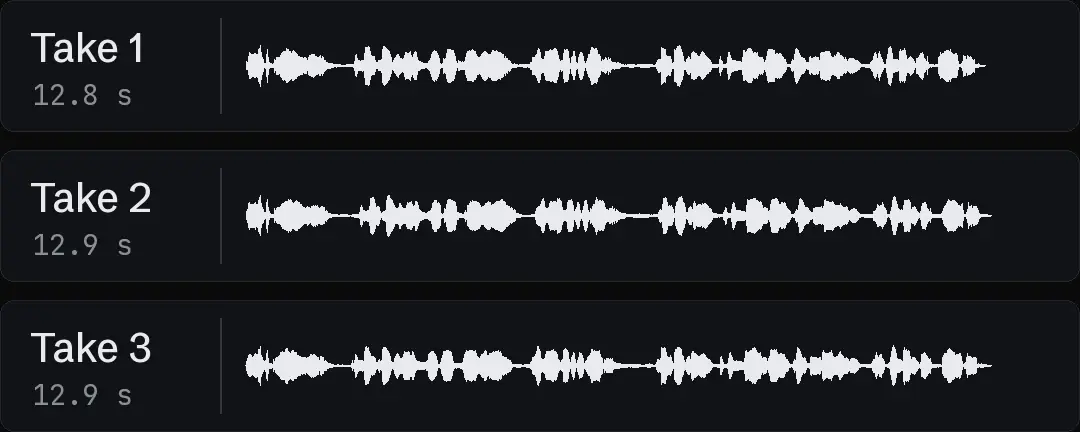
In our production in October 2026, the standard script and spoken form are separate text tracks. The spoken form expands abbreviations and writes numbers as words where needed. Captions keep the normal spelling that a reader expects.
An alias chosen to guide speech should not appear as a strange misspelling in the final captions. Maintain an explicit mapping between the standard word and the pronunciation input. If the audio says a different claim rather than a different pronunciation, fix the voice; a tidy caption cannot correct the meaning of an incorrect spoken line.
A difficult name can sound different inside the full instruction than it does in isolation. Audition that context before assembling a speaking shot, captions, or music, and ask the reviewer to identify the specific sound that needs repair. Keep normal spelling separate from voice input so the accepted pronunciation does not create visible text errors. Preserve the selected model and dictionary version with the accepted take for the handoff.
Ask a fluent reviewer a precise question
Ask whether the word is correct, understandable, and appropriate for the target language. Those are different questions. A reviewer may understand an awkward reading without wanting it in a public ad. Give them the intended spelling and the full sentence, and ask them to identify the exact audio interval that needs revision.
In our production in October 2026, a language review and short voice sample precede generation for languages we do not speak ourselves. The practice caught both translated phrasing and a pronunciation error. That is evidence for a review checkpoint, not a claim that every approved voice has undergone a listener study.
Use transcription as a diagnostic
Transcribe the sample and compare it with the standard script. A mismatch can highlight a missing word, a wrong number, or an abbreviation read unexpectedly. Then listen to that interval. A transcription system can recognize a word despite a poor pronunciation, or misrecognize a correctly spoken unfamiliar name.
Keep the transcript and the listening decision separate. Record “transcript matches, reviewer rejects place name” rather than forcing one result to overwrite the other. When the word is approved, use the real voice file for timing. Speech to text for captions: time every word explains why word timestamps and written correctness need their own checks.
- 01Select the exact modelCheck dictionary support
- 02Audition difficult wordsKeep the sentence fixed
- 03Review by listeningTranscript is a diagnostic
- 04Approve the full takeThen rebuild word timing
Repair one cause at a time
If a dictionary rule is ignored, verify its attachment to the request and its version before rewriting the entire script. If it applies but sounds wrong, revise the pronunciation rule with a qualified listener. If the phrasing itself causes awkward emphasis, rewrite the sentence and seek approval for that wording change.
Avoid stacking several speculative spellings into the same request. A short revision history makes it possible to compare the accepted reading with the baseline. Preserve the standard script throughout. The approved product name should remain consistent across audio notes, captions, and the asset label even when the spoken input looks different.
- Speech inputPronunciation aliasPublished captionNormal product spelling
- Speech inputExpanded abbreviationPublished captionReadable abbreviation if appropriate
- Speech inputAudition revisionPublished captionSame approved meaning
Carry approval into the full take
Generate the complete voice only after the difficult-word sample passes. Listen to the full sentence again: context can alter emphasis, and a correct isolated audition does not settle delivery in a longer paragraph. Check the beginning, middle, and final action line, where rushed wording is particularly disruptive.
Add music after the voice decision. ElevenLabs music for ads: plan the full music bed covers a bed that leaves room for speech. If pronunciation changes the line’s duration, update word times and affected cuts before mixing. Reusing old caption timing because the written sentence looks unchanged leaves a technical mismatch even when the new pronunciation is correct.
Hand off the accepted pronunciation
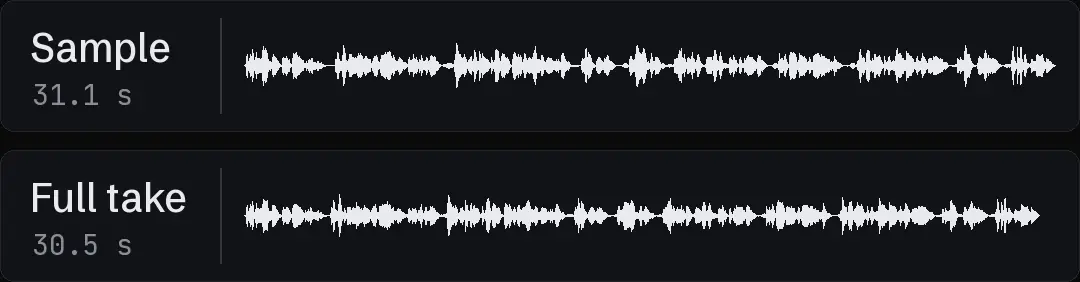
Package the standard script, spoken script, dictionary identifier and version, model and voice IDs, approved sample, and full voice file. Include the listener’s decision in plain language. Another editor should not need to reconstruct a pronunciation from a waveform or a private chat.
Kling for ads: a shot test based on its docs covers a separate video-model shot test; voice approval should remain independent of that visual experiment. Turntake’s models plan describes the planned model connection. This article explains a studio method and checked vendor documentation, not an automatic pronunciation service already available inside Turntake.
Who wrote this We made the ads first, for SmartSolar in Denmark, Sweden and Ireland. Then we built Turntake. Where Turntake comes from
FAQ
Do pronunciation dictionaries work with every model?
No. Support depends on the selected model and rule type. Check the provider’s current documentation for phoneme tags and aliases, then audition the exact model and dictionary version you intend to use in production.
Should phonetic spelling appear in captions?
Keep normal reader spelling in captions. Store pronunciation text separately and map it to the standard script. A pronunciation alias guides the voice input; it should not become an accidental spelling error in the published text.
Can transcription approve pronunciation?
Transcription is a useful diagnostic, not a final listening judgment. It may recognize an awkwardly pronounced word or misrecognize an unfamiliar correct name. Compare the transcript, then ask a fluent reviewer to listen to the actual interval.
When should I review difficult names?
Review them in a short sample before the full voice, talking head, or final edit. Test the actual sentence with surrounding words. Recheck the accepted name in the full take because delivery can change with context.
Sources
- ElevenLabs: pronunciation dictionaries checked 11 October 2026
- ElevenLabs: text to speech checked 11 October 2026
Model facts come from each maker’s own documentation, checked on the date shown. Models change, so read the source again before you plan a batch.