The ad factoryGuide
AI UGC talking heads: a portrait, a voice and b-roll that don’t feel uncanny
Short answer
Make the face and the motion separately. An approved front-facing portrait and your own voice track go into a talking-head model, and everything else in the ad is b-roll from a video model. In our work, most of the uncanny feeling came from the portrait and the pairing of face, voice and script.
Our AI talking heads failed in small ways: skin too smooth, a phone nobody asked for, a voice on the wrong face. AI UGC is one of our six formats, and this guide covers its talking-head step. For the whole chain, start with the full AI UGC workflow.
Why not one model for everything?
We tried. In our tests in October 2026, through one API provider, Seedance 2.5 refused our photoreal faces, including portraits from our own avatar library. The maker’s Seedance 2.0 launch post says real human portraits used as subject references need identity verification or prior legal authorization, so a strict face policy is no surprise. Our observation covers one provider in one month. We didn’t fight it. We split the job in two.
The face comes from a talking-head model. The model card for p-video-avatar describes one: it takes a portrait plus either a script or an audio file, and if you give it both, the audio wins. That last detail lets your own voice track decide what the ad says. Everything else, the shots without a recognizable face, is b-roll from a video model. Our rules for that side are in How to use Seedance for ads.
One ad, two jobs
- The face: an approved portrait and your own voice trackA talking-head model
- Everything else: shots without a recognizable faceA video model, as b-roll
The portrait is most of the work
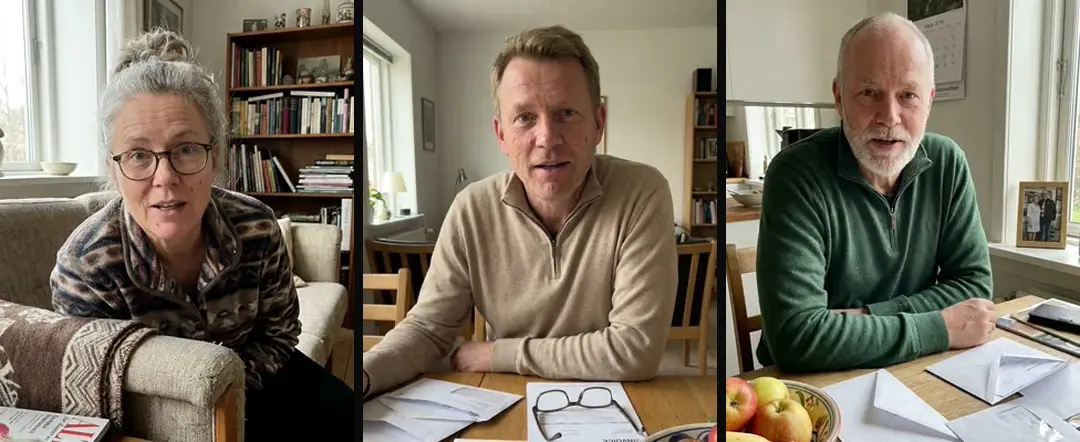
Everything downstream starts from one still. We make ours with Nano Banana, Google’s name for Gemini’s native image generation. More image rules are in Nano Banana for ads. The recipe:
- Straight on, like a webcam. Our rule is dead straight-on for the lip-sync step, and the model card warns that heavy angles hurt identity.
- Medium shot, waist up. The face is about a third of the frame height and the room is visible. Tight head-and-shoulders crops read as an AI avatar more easily.
- No phone, no hands. In our tests in autumn 2026, the image model added a held phone unless the prompt forbade one.
- Mouth slightly open, as if mid-sentence. It makes a better starting frame for lip-sync.
- Ordinary and friendly, not a model. A face that is too polished stops reading as someone you could meet.
The rest is mostly prompting. In our stills in autumn 2026, the model smoothed skin and tidied hair by default, and that smoothing was the biggest tell. Ask against it in plain words: visible pores, a few small blemishes, a slightly oily T-zone, fine grain, a few flyaway hairs, no retouching. Keep the background lived in, with mail on the table or a worn sofa. A show-home kitchen reads as staged. We make portraits in batches of about twenty, look at the first ten before the rest are made, and pick from a numbered contact sheet.
Voice first, then the face
Make the voice before the face. The voice track drives the lip-sync, and the clip comes out as long as the voice. Write the script for the mouth and pick the take as described in ElevenLabs for ad voiceovers. ElevenLabs’ own docs say to expand abbreviations and write numbers as spoken words, and the model card says clear speech gives tighter lip-sync.
Three habits keep this step honest.
- Use the original portrait. The input is always the creator’s original front-facing portrait, never a recreated one. Recreated portraits are for b-roll.
- Carry the full file name. A bare number once pointed us at the wrong person, because an avatar number and a folder number are not always the same face.
- Check every clip. The duration has to be within half a second of the voice, and both a video track and an audio track have to be there.
Pairing matters more than we expected. On one batch we reviewed, the spread in quality came almost entirely from how face, voice and script were paired, and the same voice could be strongest on one face and weakest on another. So we re-pair a voice instead of dropping it after one miss, and cut the weakest heads.
Talking head versus b-roll
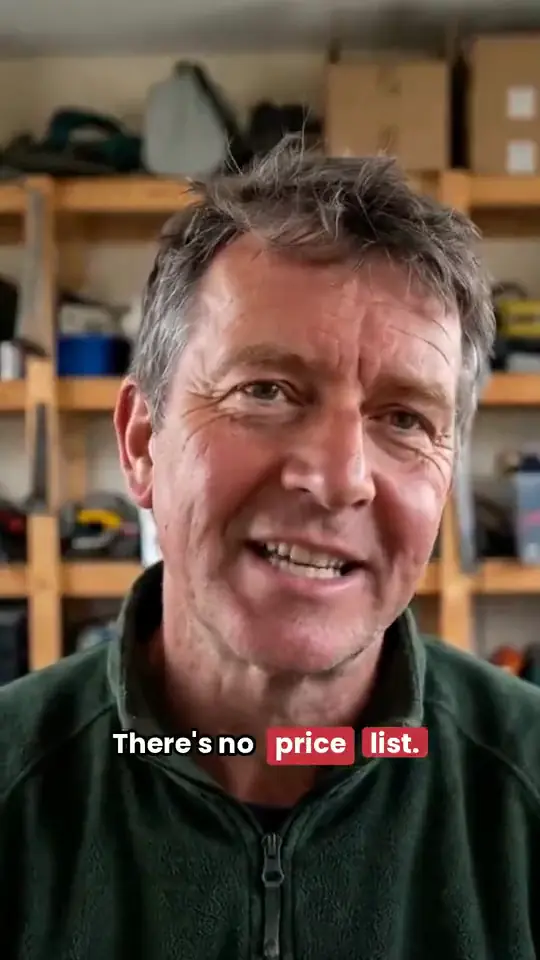
A clip where someone speaks on camera is not b-roll. We keep talking-head clips in their own folder, and they go only into ads that use the creator’s own audio. Voiceover edits use only b-roll that doesn’t talk.
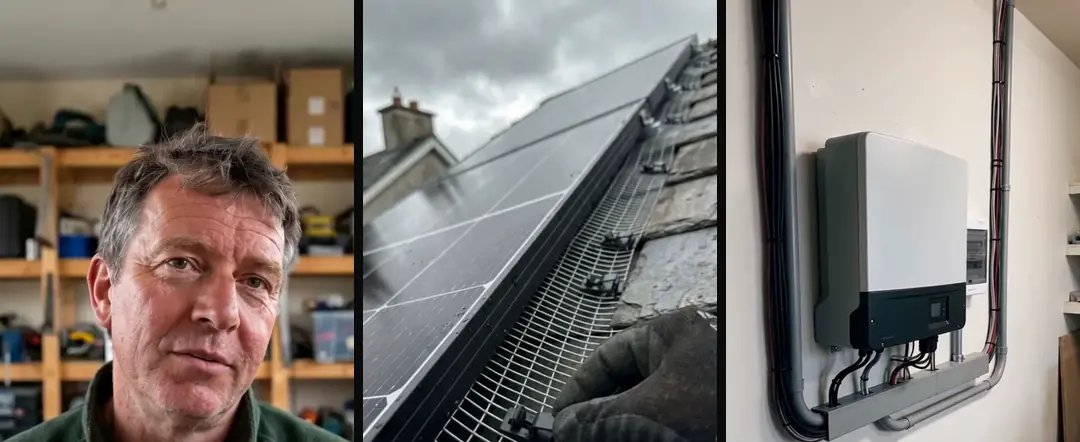
Four editing rules, from our renderer and from twenty timelines our editors delivered. Video ad zooms covers the timing and framing of the deliberate hook move.
- No slivers. No b-roll beat under one second, and no gap of talking head under one second between two b-roll beats. The first b-roll starts exactly where the hook ends, with no flash of the face in between.
- Cut away early. The editors in those timelines cut to b-roll within roughly the first four seconds.
- One move on the face. The only transformation we allow on the talking-head track is the hook zoom-out: start zoomed in on the face, hold the first words, then ease out to wide on the onset of a chosen word.
- Cutouts over graphics only. We cut the talking head out over brand and graphic b-roll, never over realistic b-roll with people. Two people in one frame read as a mistake.
In our work in autumn 2026, unnatural portraits, mismatched voice energy and passive gestures were recurring reasons to reject a talking-head cut. Uncanny AI video ads owns the detailed diagnosis. Keep the portrait, voice and selected performance available together so a reviewer can identify which part needs repair instead of treating the whole character as one inseparable output.
What does each production step hand over?
The broad workflow has four separate approvals. Treat the accepted input from one stage as the next stage’s reference, with its limitations still visible.
| Stage | Handoff | What remains to review |
|---|---|---|
| Portrait | Selected image and character reference | Voice and performance |
| Voice | Accepted audio and spoken script | Mouth movement and gesture |
| Talking head | Selected usable interval | Cutaways, text and final mix |
| Assembly | Editable recipe and rendered candidate | Complete message and final QA |
Source: Turntake’s proposed handoff checklist, October 2026.
What the creator may say
A synthetic person never claims a personal result in our ads. A first-person story about a typical situation is fine. A stated outcome, told as if it happened to this person, is not. Pick one persona per script, write the way that one person would talk, and end like a friend, not a seller.
Names and faces are claims too. A real name under a generated face is something we won’t stand behind, so names come from a pool, and the same name never sits on two faces in one ad set. We make no fake customers and no fake reviews, which is also the rule on our page for brands with their own footage.
QA per clip, and what we dropped
A talking person may look into the lens during the call to action. For silent animated figures we write the opposite into the prompt and the still: eyes stay on the laptop screen, never at the camera. AI claymation ads covers those figures.
Over the summer of 2026 we tested several routes to talking heads and kept the one where lip-sync, identity and reliability held up. Routes built on long multi-segment character references drifted in identity between segments, and continue-from-previous blended scenes. That is a record of our tests, not a ranking.
Today we run this chain in our own studio. We’re building Models in Claude Coming so the portrait, voice and talking-head steps can run from Claude. Early access: we set it up with you. Coming: we’re building it. The planned lineup is on the models page.
Who wrote this We made the ads first, for SmartSolar in Denmark, Sweden and Ireland. Then we built Turntake. Where Turntake comes from
FAQ
How do I make a talking head from a photo?
Use a clear, front-facing portrait and a finished voice track, and give both to a talking-head model that lip-syncs to audio. The clip comes out as long as the voice. Make the voice first, check the clip’s length against it, and cut the face against b-roll instead of holding it for the whole ad.
Why do AI UGC ads look uncanny?
Mostly because of the portrait and the pairing. In our work the tells were smoothed skin, a phone or a car in the frame, a gaze tilted up at nothing, and a face, voice and script with mismatched energy. Fix the portrait prompt, re-pair the voice, and cut the passive b-roll.
Can an AI creator say they used the product?
Not in our ads. A synthetic person can tell a story about a typical situation, but it does not claim a personal result or a purchase. We write persona scripts as situations, keep numbers to ones we can document, and take names from a pool, so no generated face carries a real person’s name.
Should the AI creator look at the camera?
A talking person can, and in our ads they may look into the lens during the call to action. Silent animated figures are the exception. For those we write that the eyes stay on the screen, never at the camera, into both the prompt and the start image.
How much talking head and how much b-roll?
There is no ratio we would give you. In the ads we cut, the talking head carries the hook and the personal lines, and b-roll covers the rest. The twenty editor timelines we studied cut away to b-roll within about the first four seconds, so the face never has to hold the whole ad.
Sources
- Pruna AI: p-video-avatar model card checked 10 October 2026
- ByteDance Seed: Official launch of Seedance 2.0 checked 10 October 2026
- ElevenLabs docs: Text to speech, writing for the voice checked 10 October 2026
- Google: Nano Banana image generation (Gemini API) checked 10 October 2026
Model facts come from each maker’s own documentation, checked on the date shown. Models change, so read the source again before you plan a batch.