ModelsModel guide
How to use Seedance for ads: start frames, b-roll prompts and the face limit
Short answer
Use Seedance for the shots between the words: b-roll, product moments and motion, animated from a start frame you’ve already approved. Give each shot one camera move and one action. In our own tests in October 2026, photoreal faces were refused, so we make talking heads with a separate model.
For us, the hard part of Seedance in an ad was never the motion. It was keeping each shot true to the still it started from. In our own ads in autumn 2026, Seedance did the b-roll, the shots between the words. Facts about the model come from its maker, with a link. What we saw ourselves is dated and labeled as ours.
What Seedance is, according to its maker
Seedance is a family of video models from ByteDance Seed. These are the facts we rely on, each from the maker’s own posts:
| Fact | What ByteDance Seed says | Version |
|---|---|---|
| Inputs | Text, image, audio and video; the launch post allows up to 9 images, 3 video clips and 3 audio clips at once, plus written instructions | Seedance 2.0 |
| Output | 15-second multi-shot video with sound | Seedance 2.0 |
| Longer clips | Up to 30 seconds per generation, with multi-round extensions | Seedance 2.5 |
| More references | Up to 30 images, 10 video clips and 10 audio clips in one pass | Seedance 2.5 |
| Real people | Real human portraits used as subject references need identity verification or prior legal authorization | Seedance 2.0 |
Source: ByteDance Seed, Seedance 2.0 page, Seedance 2.0 launch post (12 February 2026) and Seedance 2.5 post (31 July 2026), checked October 2026.
Neither the posts nor the model page give an output resolution, so we don’t list one. Limits can differ between the maker’s service and other providers, so confirm them on the page of the service you use. How Seedance sits next to its neighbors is in Seedance vs Kling vs Veo.
Start from a frame you have already approved
Seedance does the motion in our workflow, and the still comes first. Consistency comes from the locked start frame, so we approve the frame before we spend anything on motion. If your provider also offers a seed, keep it fixed. Nano Banana for ads covers how we make those frames.
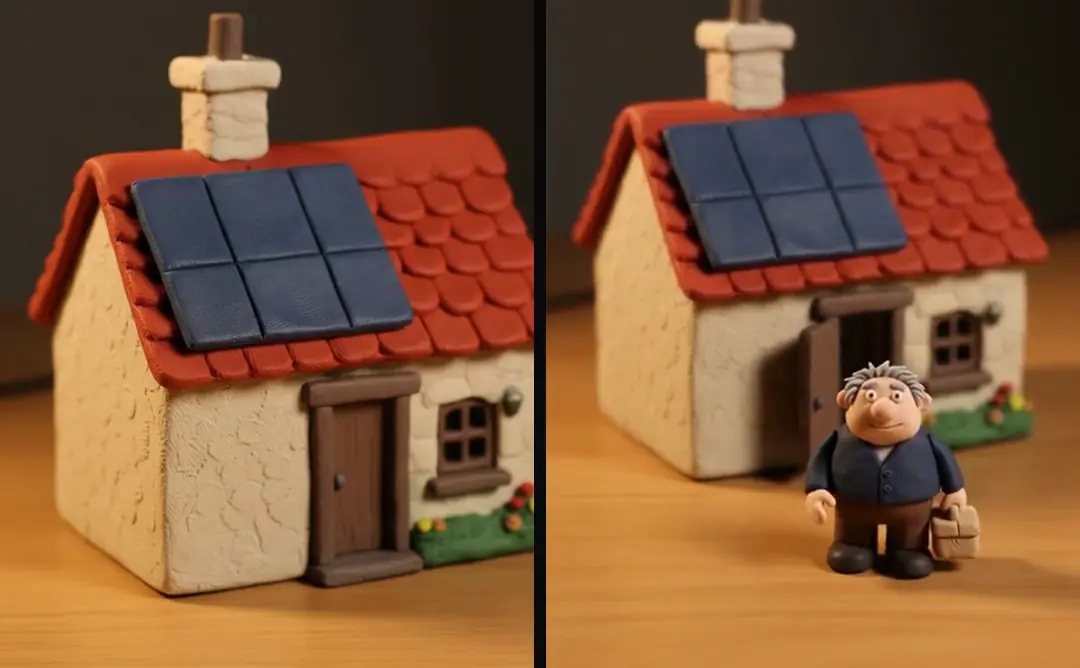
Two rules come with that. The clip follows the format of the start frame, so make the frame 9:16 from the start. And any text in the shot is born in the start frame, written by the image model in the market’s language, with everything important inside the 4:5 area of the frame (y 285–1635 on 1080×1920).
Our prompts end the same way: one simple camera move, one subtle action, and a line that keeps the scene as it is in the reference image.
Slow push-in on the kitchen table. Steam rises from the cup. Keep the scene exactly as in the reference image.
One move, one action
Most of our failures came from asking too much of a single shot. These patterns held up, and this is what broke when we ignored them:
| What breaks | What we saw | What we do |
|---|---|---|
| Architecture in motion | Wide aerial shots of a building twisted: the geometry folded and the roof bent | Prompt a locked, almost static shot and say the building and roof stay rigid |
| Hands | Close-ups of fine hand work, such as writing or counting coins, made fingers morph | Keep hand action to one safe beat, or cut away when it turns odd |
| Text, screens and numbers | Generated text came out as gibberish | Ask for blank paper and blank screens; burn numbers on afterwards |
| A change of place inside one generation | The figure changed face at the cut | Split it into two runs, each with its own start frame, and start run B on the last frame of run A |
| Long static holds | A shot that holds too long is allowed, but tiring on a contact sheet | Generate a second angle of the same scene and split the hold into two shorter shots |
Source: our own production, September to October 2026.
A change of place: two runs, not one
- 1Run B starts on the last frame of run A
On text, one more finding: the model could write a single word correctly when the prompt spelled it out and called it the only text in the shot. Anything longer we add afterwards as an overlay.
In our tests through one API provider in October 2026, photoreal face references were refused. That observation is specific to the model version and service, rather than a universal rule about every Seedance deployment. The dedicated face-detected guide explains the documented boundaries and our separate portrait-and-voice route for talking-head ads. We do not plan an ad around an input that the chosen service has rejected.
Keep one world across shots
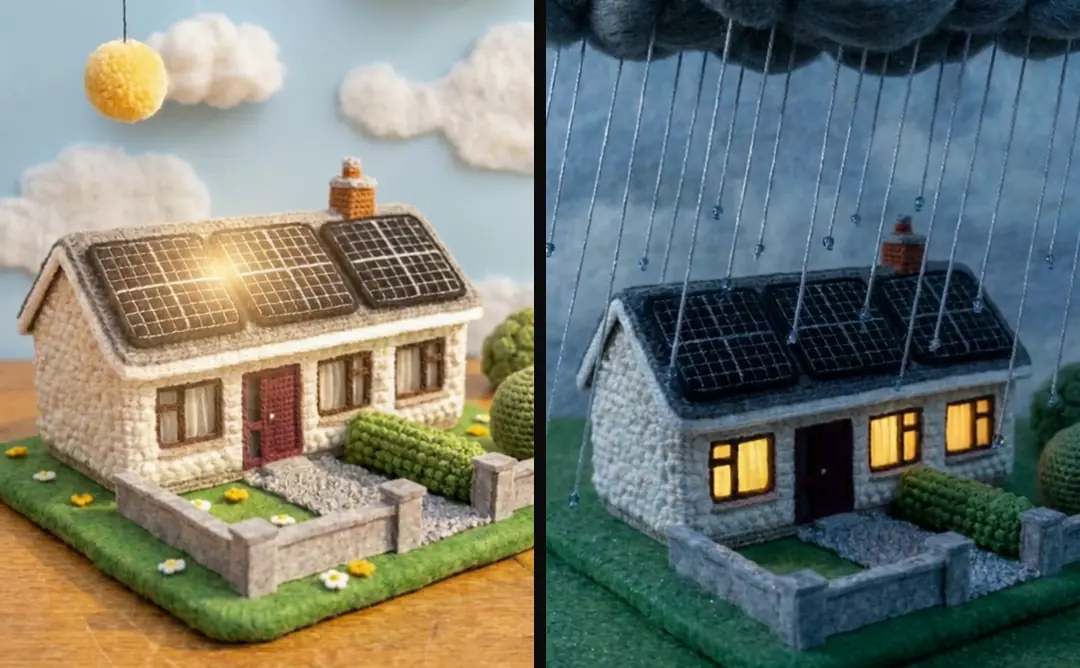
A run of single shots turns into ten different houses or ten different faces unless you lock the world. We write one character block and one style block, copy them word for word into every prompt and never edit them between ads. We describe the style in plain words and never name a studio or a film.
For places, we build a scene pack: the same house from about six clearly different angles, never two frontal ones, each generated from the anchor image as a reference, with one pack per ad. AI skeleton ads and AI claymation ads show the same discipline in two different worlds. When a story needs more than one run, start the next run on the last frame of the one before.
Lip-sync and other languages
In September 2026 we tested Seedance with spoken dialogue. The English was convincing; the Danish and Swedish lip-sync was not usable for us. So for markets that don’t speak English we use silent clips and our own voice track. The figure never speaks and never looks at the camera, and a small figure in frame tolerates dubbing because the mouth isn’t visible.
That was a September observation, and the model has moved on: the Seedance 2.5 post lists audio clips as reference input. Read the maker’s page and test your own language before you rely on it. ElevenLabs for ad voiceovers covers the voice side.
Practicalities: resolution, jobs and cost
Resolution follows purpose. We use the standard resolution for b-roll that sits under captions and go higher only for shots with text or numbers. The finished master is 1080×1920. We don’t generate sound for clips that will play silent anyway.
Jobs run asynchronously, so we submit, then poll, with a state file. Four habits saved us money and time:
- Never resend a job that was submitted or has succeeded, because that is a double charge.
- A killed call doesn’t kill the job at the provider, so check status by request ID before you retry.
- Download the output at once, because output links are temporary.
- Set a hard spending cap, and log the ID and cost of each job as you submit it.
Then comes the library. We cut every generation at real shot boundaries, scale it to 1080×1920 and save it without sound under a market prefix, with one index line. New ads are built from the library first, and only the missing beats are generated. A b-roll library for ads covers the rotation.
Seedance is on the lineup of the Turntake models page, a plan that will change. With Models in Claude Coming you would ask Claude for a shot and Turntake would run the model, and Cost shown before you run Coming would show the cost in credits before anything runs. Early access: we set it up with you. Coming: we’re building it.
Who wrote this We made the ads first, for SmartSolar in Denmark, Sweden and Ireland. Then we built Turntake. Where Turntake comes from
FAQ
Why does Seedance say a face was detected?
In our October 2026 tests through one API provider, Seedance 2.5 refused photoreal faces in the start image, the reference images and the reference audio, with a sensitive-content error. ByteDance Seed’s launch post says real human portraits used as references need identity verification or prior legal authorization. Check the rules of the service you use, and make faces with a separate talking-head model.
Can Seedance make a talking-head UGC ad?
Not in our tests. Through one provider in October 2026, Seedance 2.5 refused every photoreal face we gave it. So we make the talking head with a separate model, from an approved portrait and our own voice track, and let Seedance do the b-roll around it. Rules differ between services, so test your own setup before you plan around it.
Do I need a start frame for Seedance?
No. ByteDance Seed lists text among the supported inputs, alongside images, audio and video. We still always start from an approved still. A locked frame fixes the look, the format and any text before you pay for motion, and it keeps shots from the same scene matching each other.
Can Seedance write text in a shot?
Short words, sometimes; sentences, no. In our tests one word came out right when the prompt spelled it out and called it the only text in the shot. Longer text, numbers and screens turned into gibberish. We ask for blank surfaces and add the real text afterwards as an overlay, with the camera locked.
How long can one Seedance shot be?
ByteDance Seed’s launch post for Seedance 2.0 describes 15-second multi-shot output, and its Seedance 2.5 post says up to 30 seconds per generation, with multi-round extensions (checked October 2026). The service you run it through may set its own limits. We cut b-roll into short shots anyway, because long holds tire the eye on a contact sheet.
Sources
- ByteDance Seed: Seedance 2.0 checked 10 October 2026
- ByteDance Seed: Official launch of Seedance 2.0 checked 10 October 2026
- ByteDance Seed: Introducing Seedance 2.5 checked 10 October 2026
Model facts come from each maker’s own documentation, checked on the date shown. Models change, so read the source again before you plan a batch.