The ad factoryGuide
Crochet-style AI ads: keep the world consistent
Short answer
Build crochet-style ads from approved stills that establish yarn, stitch scale, object shape, and scene layout. Describe changing weather or light without changing the material rules. Animate one small action, then inspect thread texture and geometry through motion. The style explains a scene; it does not prove a real product’s performance.
Yarn texture loses its purpose when the product becomes an unreadable soft shape. Define which material cues create the crochet world and which shapes must remain recognizable. Approve scale, silhouette, and texture in stills first, then give motion a narrow action that preserves the visual language through the usable interval.
Establish the material in a still
Describe visible stitches, yarn thickness, and the level of detail the shot needs. A wide building view and a close object view may need different framing, but they should still belong to the same world. Decide whether edges are soft and handmade or structurally firm.
In our production in October 2026, animation formats have their own character and style blocks. Keep the crochet block separate from the action request and reuse it unchanged across related shots. A new weather description should not become an accidental rewrite of the material, character proportions, or architecture.
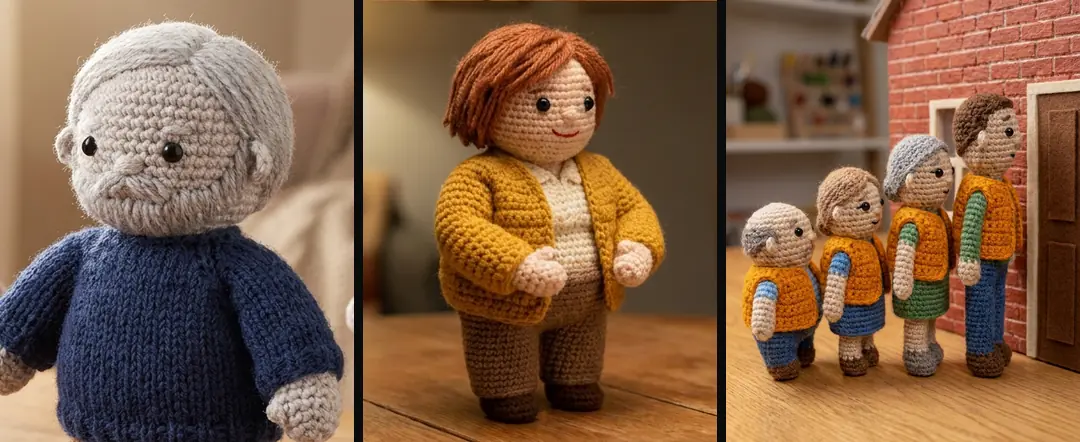
Lock stitch scale and object proportions
Choose a reference image that shows enough of the scene to judge scale. Compare windows, doors, hands, and any product against familiar objects in the same frame. A yarn house with tiny stitches and a character with huge loose loops may appear to belong to two different sets.
Keep a short inspection list with the reference. The list should name what must remain stable: roof outline, window positions, character clothing, stitch density, and the product silhouette. Do not rely on the word “crochet” alone to specify all those details. It describes a material idea, not a complete visual system.
| World detail | What should remain stable |
|---|---|
| Yarn and stitches | Comparable thickness and density |
| Building | Roof, doors, windows, and overall shape |
| Character | Proportions and wardrobe |
| Weather objects | Same handmade material logic |
Source: suggested production checklist, October 2026.
Change conditions without changing the world
A sunny scene and a rainy scene can show the same place under different conditions. Describe which elements change: light, cloud, rain, window glow, or ground color. Keep the underlying house and character reference fixed.
In our production in October 2026, scene packs reuse an anchor across distinct views and conditions. For a hypothetical seasonal story, a yarn sun and a dark yarn cloud can establish the contrast. The scene remains illustration. Do not use weather imagery to imply a measured product result that the actual evidence does not support.
A desk organizer can establish the crochet style through loops and stitching while retaining a clear functional silhouette. The three compartments are the useful constraint in a hypothetical brief: they must remain distinguishable from the pens and surrounding material. Inspect that structure in stills before motion. A small camera move can then reveal the texture without asking the scene to rearrange so much that the organizer becomes an indistinct soft object.
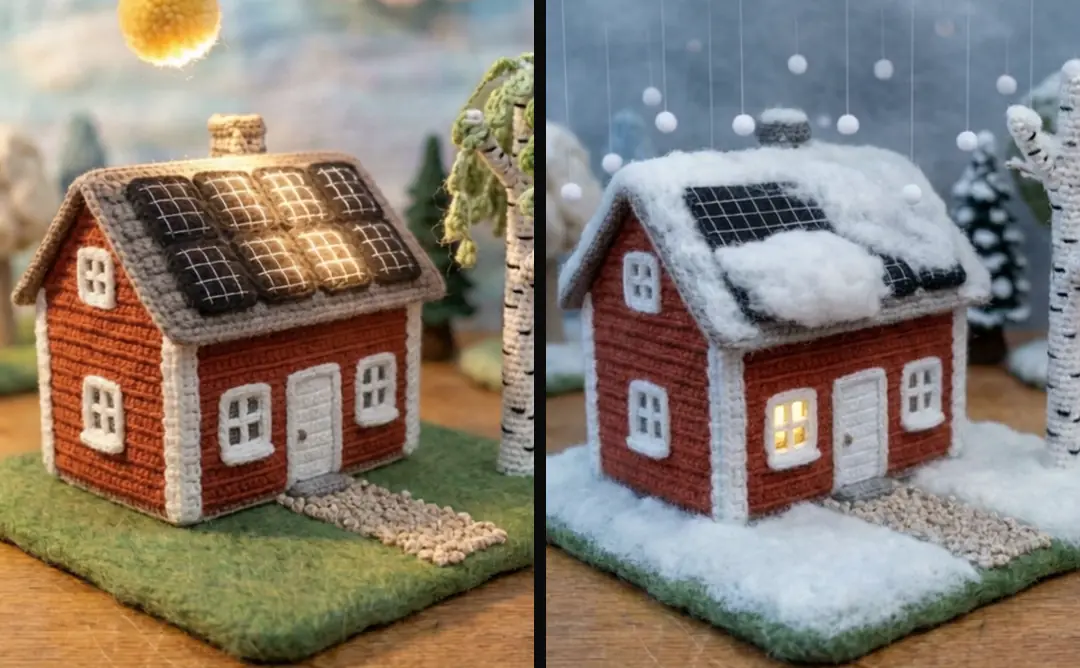
Make motion small enough to inspect
Choose one action and one camera movement. A gentle push toward the house with a small curtain movement can communicate a scene without forcing the architecture to transform. If a character walks, avoid adding a simultaneous object demonstration unless it is necessary.
In our production in October 2026, broad architecture shots use nearly static movement because more ambitious motion could bend geometry in our route. That is a dated observation, not a universal limit. Review the actual returned shot against the approved still and keep the motion only when the material and structure remain coherent.
Inspect thread behavior through the shot
Look for stitches that disappear, strands that become smooth plastic, and edges that change thickness. Review the first, middle, and last frames, then play the full interval. Texture can look acceptable in a paused frame while boiling or crawling in motion.
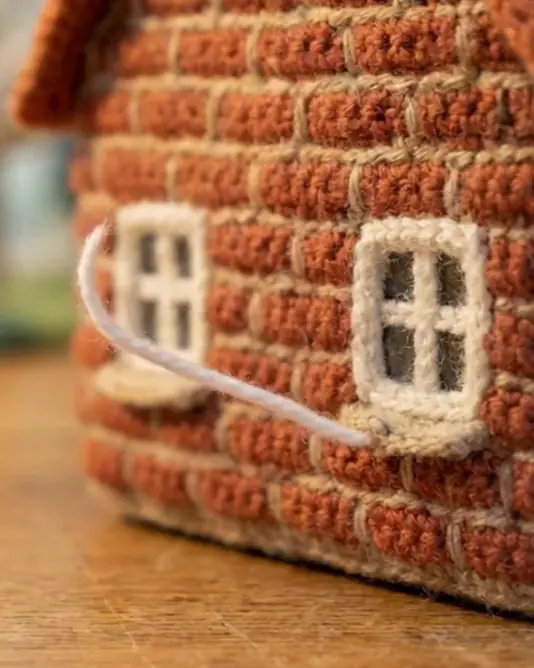
Check small objects near the frame edge. A yarn cloud should not become a flat graphic halfway through a pan. A sleeve should not turn into a different material when a hand moves. Identify the affected interval so the next request can target a texture or action problem rather than rewriting the whole world.
- 01Approve the yarn worldMaterial and scale
- 02Lock the anchor sceneGeometry and character
- 03Change one conditionLight or weather
- 04Inspect texture in motionPreserve stitches and shape
Keep product evidence distinct from metaphor
A crochet house can establish a familiar domestic setting. It cannot by itself prove how a real household product behaves. When the script needs a mechanism, capacity, or real action, include appropriate source material and keep the illustration’s role clear.
Drone explainer ads: labels that explain one idea explains an ad structure without a spokesperson. That can be useful when the yarn world carries context and a real product insert carries proof. Faceless AI ads for brands: show the useful action covers static design, where a material reference can be established before motion. Keep the relation between those assets explicit so an editor does not mistake an attractive metaphor for evidence.
- Stable world elementStitch density and yarn thicknessIntentional scene changeSunlight or window glow
- Stable world elementHouse geometry and character scaleIntentional scene changeRain or cloud placement
- Stable world elementCanonical material blockIntentional scene changeOne shot’s action
Design captions for textured backgrounds
Crochet imagery can contain fine detail across the entire frame. Reserve a calm region for words or use a readable caption treatment that does not hide the key object. Inspect it at phone size rather than judging only the full-resolution still.
Weather changes can alter contrast. A caption that works over bright yarn may disappear over a lit window in the night scene. Review every condition with its actual text. AI static ads: a clear image before decoration addresses a different explanatory visual form; switching format does not remove the need to protect labels and the object they explain.
Save a reusable world package
Keep the anchor still, canonical material block, approved angles, condition changes, selected intervals, and review notes together. Distinguish the stable world instructions from the one-shot action so a later editor can request another angle without changing stitch scale.
ai ugc ads workflow gives the overall workflow, and Turntake’s production workflow describes the production approach. This is a recommended material-continuity method backed by dated own practice, not an automatic crochet-generation feature. The accepted asset should make its scene clear while preserving the yarn rules and the limits of what the illustration actually demonstrates.
Who wrote this We made the ads first, for SmartSolar in Denmark, Sweden and Ireland. Then we built Turntake. Where Turntake comes from
FAQ
What belongs in a crochet style block?
Describe visible yarn, stitch scale, edge softness, object proportions, and the scene’s material rules. Keep that block stable across related shots. Separate it from changing actions and weather so a new prompt does not quietly redefine the world.
How can I show sun and rain consistently?
Use the same place reference and identify only the condition changes, such as light, cloud, rain, and window glow. Compare both stills before motion. The house geometry and stitch scale should remain recognizable across the two scenes.
Does a crochet product scene count as proof?
Treat it as illustration unless appropriate real evidence supports the claim. A material world can explain context, but it does not establish a real mechanism or result. Use actual product footage when the statement depends on physical behavior.
What should I inspect in the moving texture?
Check disappearing stitches, changing strand thickness, smooth patches, and crawling detail. Inspect sampled frames and normal playback. A clean first frame does not establish stable material through the complete action, especially near moving hands and scene edges.