The ad factoryGuide
3D animation ads: build one coherent scene
Short answer
Plan a 3D animation ad around a consistent scene, a small cast and one action per shot. Keep a canonical record of characters, props and camera relationships, then use approved stills to carry continuity into motion. Treat animated metaphors as illustrations, and use separate evidence for any factual product mechanism or result.
Give the scene a stable purpose
A 3D kitchen scene can introduce a decision, show a relationship or make an abstract mechanism visible. Choose that job before designing the room. Otherwise, attractive props can distract from the point the ad needs to communicate. Give the viewer one clear reason to look at the scene, then build its action around that reason.
In our production in October 2026, a locked character and style description supports continuity across shots. The scene should feel like a place the same characters inhabit, not a succession of unrelated model outputs. ai ugc ads workflow provides the format context. This guide focuses on the scene decisions that make a short 3D sequence coherent enough to edit.
Consider a hypothetical ad for a folding shelf. The spoken line explains how the support arm opens, so the scene needs a stable view of that hinge and its stopping point. A rotating room reveal would add movement while hiding the relevant contact. Keep the wall, shelf and camera relationship consistent, then inspect whether the visible action actually completes the explanation before adding decorative furniture.
Record character proportions, clothes, hair, positions, key props, light direction and the room layout. Pick a few anchors that will be visible in every relevant angle: the same table edge, pendant light or cabinet color. A long list of hidden details adds little to continuity review.
For a hypothetical kitchen conversation, assign one character to each side of the table and keep the product between them. Name those positions in the shot brief. If a reverse angle changes their screen positions, make that choice deliberately. Do not let each prompt reinvent the room. A small canonical bible gives the still reviewer a reference for accepting or rejecting a new angle.
| Check | Suggested action |
|---|---|
| Scene bible | Record cast, props and lighting |
| Action | Use a single inspectable change |
| Still | Approve the actual reference file |
| Sequence | Check continuity at every cut |
Source: Turntake editorial checklist (proposed), October 2026.
Design shots around one action
One character can turn toward the product, lift a lid or react to an explanation. Asking the same shot to include several actions, a camera orbit and a scene change makes the result harder to inspect and harder to cut. Our October 2026 motion method uses one simple move and one action as a working constraint.
That constraint is editorial, not a claim about every model’s capabilities. It helps create a clean starting state, visible change and usable ending. Crochet-style AI ads: keep the world consistent describes how another animation format maintains a consistent world. If the thought needs a second location or a new object, plan a separate shot with its own approved start frame and continuity anchors.
- 01Define scene jobEstablish the communication beat
- 02Lock cast and propsRecord visible anchors
- 03Approve each angleCheck continuity before motion
- 04Review sequenceSeparate metaphor and evidence
Make metaphors visibly illustrative
An animated object can help explain a process, but its behavior must not invent a product capability. A part floating into place may be a diagrammatic explanation; it is not footage of the real assembly. Decide how the viewer will understand that distinction.
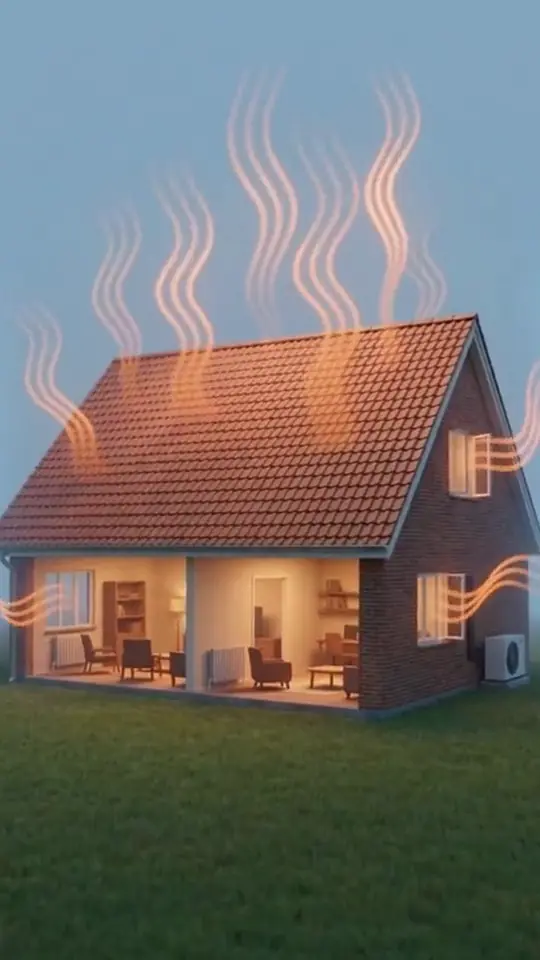
In our production in October 2026, actual readable screens and product evidence are kept under editorial control. A stylized kitchen does not remove that responsibility. Use a real demonstration or controlled graphic when the claim depends on precise behavior. Avoid implying that an animated character is a real buyer describing a personal result. The story may be fictional while the factual statements still require sources.
Approve stills before motion
Review the scene at the intended aspect ratio. Check that the product is recognizable, the characters match the bible and important action fits inside the composition. A close-up may look appealing while omitting the hand or lid needed to understand the movement.
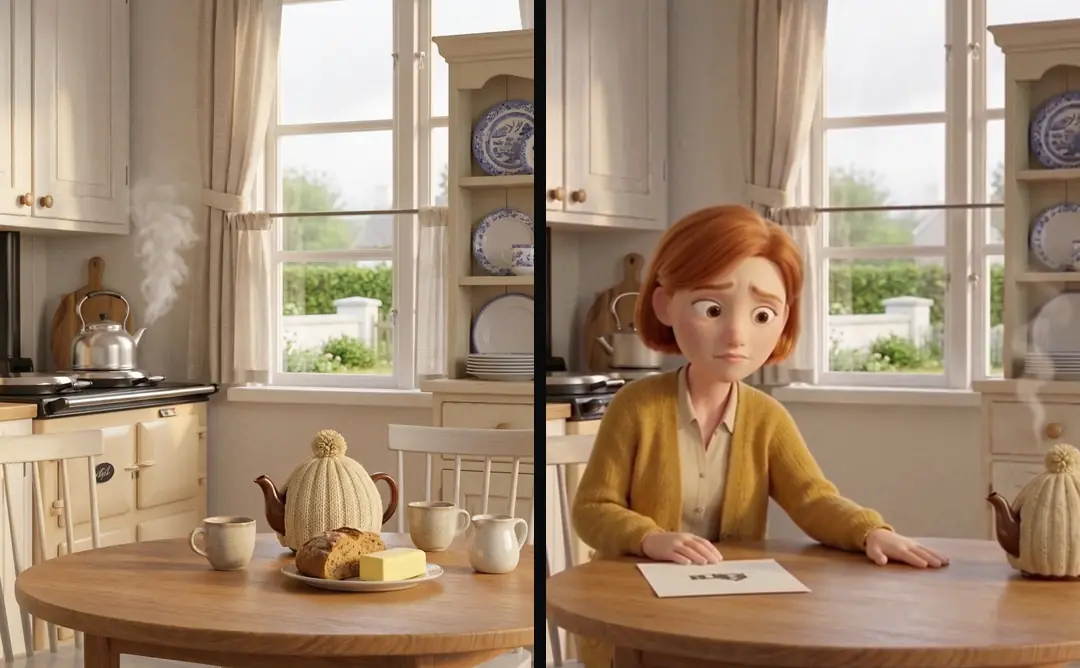
Save approved stills as assets with IDs and references. For a second angle, compare props and light direction with the first angle before generating motion. Drone explainer ads: labels that explain one idea covers controlled labels when the explanation moves to an aerial view. Do not assume that using the same prompt creates the same room. The actual frame is the source the motion stage and editor will use, so approval belongs to that file.
- Continuity anchorCharacter clothingReview questionDoes it match across angles?
- Continuity anchorProduct geometryReview questionDoes its shape remain stable?
- Continuity anchorRoom layoutReview questionCan viewers follow positions?
- Continuity anchorIllustrative actionReview questionIs factual evidence separate?
Cut on the change in thought
Build the voice track and assign each shot a communication beat. A kitchen wide can establish the situation; a product detail can explain the mechanism; a reaction can close the thought. Avoid a sequence in which every shot carries the same information at a slightly different scale.
Keep narration continuous across cutaways when that serves the explanation. A transition is not a substitute for a reason to cut. Faceless AI ads for brands: show the useful action describes product-led shots when a character does not need to carry the scene. Inspect the frame before and after each cut for changed props, mismatched character positions or a product that changes shape between angles. Those discontinuities can make the mechanism difficult to follow even when each shot is individually attractive.
Review the whole sequence for identity and truth
Watch once for story, once for continuity and once for factual content. During continuity review, track clothes, product geometry, lighting and the kitchen anchors. During factual review, isolate each claim and identify the evidence that supports it. Do not let a convincing character performance replace that evidence.
Keep the scene bible and shot register with the final recipe. A later replacement should inherit the same anchors and the same factual restrictions. If a new concept needs a different room, create a new scene revision rather than mixing the two designs in one supposedly continuous conversation.
Turntake’s production approach describes Turntake’s production approach. The practical handoff for this format is the scene bible, approved still set, motion clips and beat map. Add a note where an action is an animated metaphor. That lets an editor reuse the shot intelligently and prevents a future caption from turning a harmless illustration into an unsupported product promise.
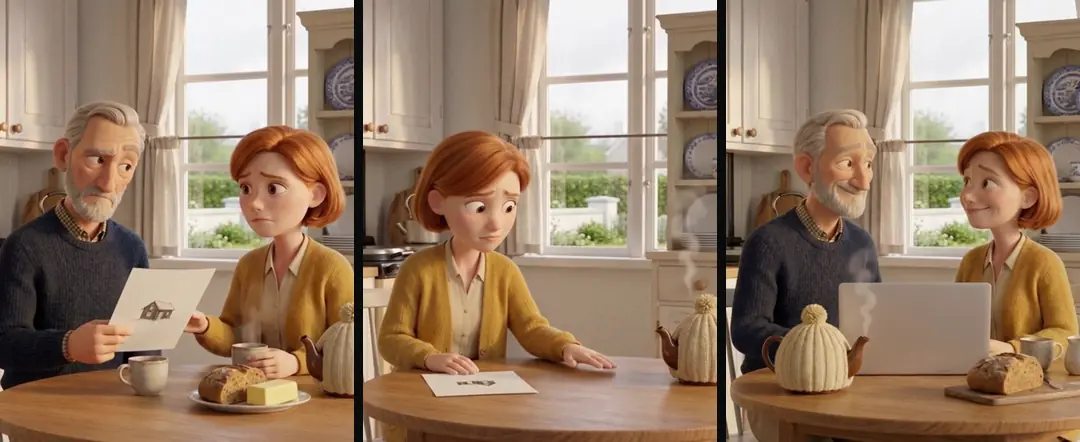
Inspect prop continuity explicitly
In a hypothetical kitchen sequence, list the mug, product and chair visible in the first angle. Compare their number, placement and appearance in the second angle. A missing mug may be a minor continuity issue, while a changed product component can alter the explanation. Classify the defect by its effect rather than rejecting every difference equally. This small prop register makes the review practical and gives a replacement-shot brief concrete details to preserve.
Who wrote this We made the ads first, for SmartSolar in Denmark, Sweden and Ireland. Then we built Turntake. Where Turntake comes from
FAQ
What should a 3D scene explain?
Plan a 3D animation ad around a consistent scene, a small cast and one action per shot. Keep a canonical record of characters, props and camera relationships, then use approved stills to carry continuity into motion. Treat animated metaphors as illustrations, and use separate evidence for any factual product mechanism or result.
What belongs in a scene bible?
Record character proportions, clothes, hair, positions, key props, light direction and the room layout. Pick a few anchors that will be visible in every relevant angle: the same table edge, pendant light or cabinet color. A long list of hidden details adds little to continuity review.
How many actions should one shot contain?
One character can turn toward the product, lift a lid or react to an explanation. Asking the same shot to include several actions, a camera orbit and a scene change makes the result harder to inspect and harder to cut. Our October 2026 motion method uses one simple move and one action as a working constraint.
Can animation serve as product evidence?
An animated object can help explain a process, but its behavior must not invent a product capability. A part floating into place may be a diagrammatic explanation; it is not footage of the real assembly. Decide how the viewer will understand that distinction.