The ad factoryGuide
Localize video ads without translating the script
Short answer
Localize a video ad by rebuilding the spoken explanation in the market’s ordinary language while preserving approved facts. Review the script with a language editor, test difficult pronunciation in a short sample and time captions against the final audio. Adapt footage and labels only where the new version requires them, then approve that version separately.
Preserve meaning before translating sentences
A translated script can be grammatically correct while sounding like an English ad rearranged into another language. Start with a plain explanation of the mechanism, audience situation and final action, then write the new script from those ingredients. Check the local wording and actual voice before rebuilding captions and edit timing around the accepted language version.
In our production in October 2026, language review and a short voice sample precede motion generation. That order makes awkward phrasing and pronunciation cheaper to correct. ai ugc ads workflow describes the full workflow. Localization is a separate editorial pass inside it, because the new language may change sentence order, emphasis and timing even when every approved fact stays the same.
A hypothetical kitchen bin demonstration needs viewers to connect a spoken instruction with the hand opening its lid. The local script may use a different sentence structure, but it must preserve the action and any required condition. Review that meaning before recording. After accepting the local voice, check whether the opening movement still coincides with the relevant words. Reusing the original timestamps without listening can separate the instruction from the action it describes.
List product names, dates, numbers, qualifications and destination instructions that must survive the rewrite. Link each material statement to its approved source. Give the language editor permission to change phrasing without changing those facts. If the source itself is unclear, return that question to the factual owner.
A hypothetical service ad might have a valid location list and a particular next action. The localized version must preserve both. A familiar city name does not establish that service is available there, and a smoother sentence does not justify dropping a qualification. Keep the locked sheet beside the script so factual review can compare meaning without requiring the reviewer to reconstruct the original campaign.
| Check | Suggested action |
|---|---|
| Facts | Maintain a sourced locked sheet |
| Language | Review ordinary phrasing |
| Audio | Test difficult words first |
| Final | Approve the localized file separately |
Source: Turntake editorial checklist (proposed), October 2026.
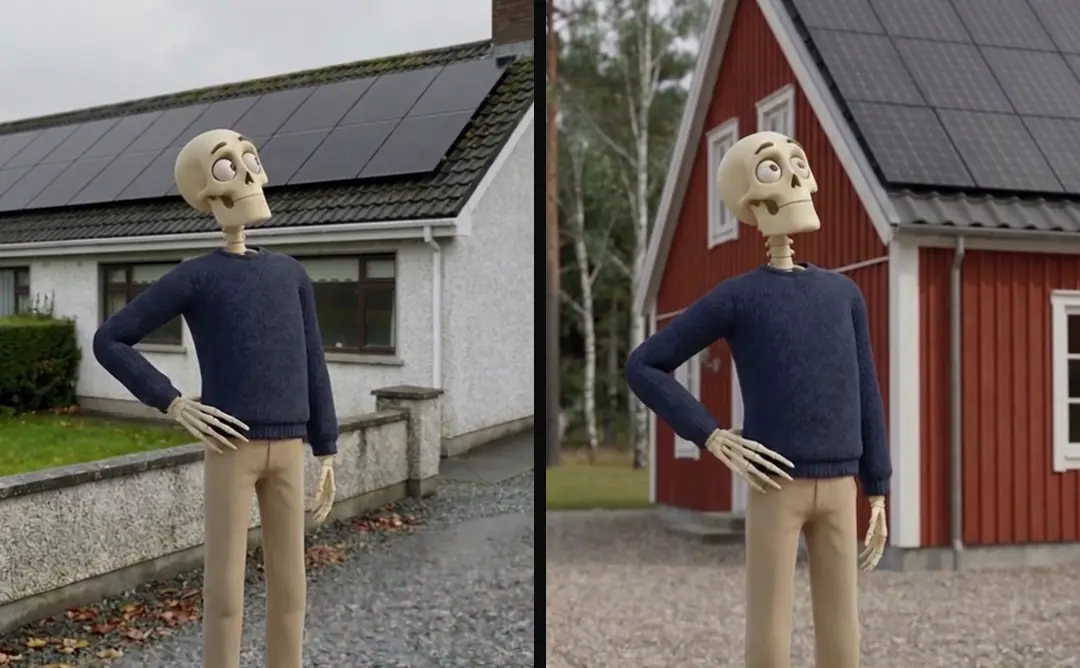
Rewrite the mechanism in ordinary local phrasing
Explain what happens, who does it and why the next step makes sense. Ask the editor to identify phrases a person would understand but would rarely say. Replace those phrases with ordinary local constructions while keeping the mechanism specific.
In our October 2026 writing method, each sentence carries context from the previous sentence. That still matters after localization. A literal translation can move the setup behind its consequence or introduce a pronoun before its subject. Captions for video ads: groups, timing and layout covers the caption grouping that follows the approved localized voice. Read the new version as its own conversation rather than judging it only by whether each original sentence has a matching sentence in the translation.
- 01Lock factsPreserve names and qualifications
- 02Rewrite locallyCheck sentence flow
- 03Approve short audioResolve pronunciation
- 04Retime edit and captionsReview localized final
Test pronunciation before committing to the voice
Choose a sample containing the brand, the difficult place name and the phrase that carries the mechanism. Keep standard text and pronunciation text separately. A phonetic spelling may help a voice engine, but it should not appear in captions or product labels.
In our production in October 2026, a short sample plus speech-to-text comparison helped catch pronunciation problems before larger jobs. Listening remains necessary. A transcript can spell the intended name even when stress is unnatural, or mishear an acceptable reading. The reviewer should report the actual problem and the approved correction, not simply label the language “good.” 3D animation ads: build one coherent scene covers scene continuity when the localized voice accompanies a 3D sequence.
Fit the edit to the approved audio
Use the final voice as the timing reference. Do not squeeze a new language into the old pauses by changing the meaning or cutting important consonants. Map the visual beats to the new spoken thought, then identify shots that no longer cover their assigned interval.
Our October 2026 retiming method keeps existing clips where possible and reports beats that need too much stretch or a long frozen hold. A longer neighboring shot or a different library clip may solve the problem. If a new shot is required, keep its brief narrow. Localization should not accidentally become a new visual concept merely because one sentence takes longer to say.
- PreserveProduct factsAdaptSentence structure
- PreserveApproved destinationAdaptOrdinary local wording
- PreserveClaim qualificationsAdaptShot timing
- PreserveStandard spellingAdaptPronunciation input
Rebuild captions and labels from controlled text
Generate cue timing from the localized audio and use standard spelling for display. Check dates, names and negations explicitly. A missing negative in a caption can reverse the claim even when the voice is correct. Inspect both the first and last parts of the ad for timing drift.
Review text embedded in footage as well as the subtitle track. A background screen can reveal the old language, currency or date. If that text is central evidence, film or build the correct version. A generic replacement screen should be labeled as illustration where needed; it does not prove a localized interface exists. Crochet-style AI ads: keep the world consistent covers another animation format whose visual identity should survive a language change.
Approve the localized version on its own merits
The factual owner checks the locked fact sheet against the new meaning. The language editor checks ordinary phrasing and pronunciation. The creative reviewer checks whether shots and voice still communicate the intended story. Record those approvals against the localized output ID rather than the original ad.
Watch the whole file at phone size, with sound, then inspect the readable text without sound. This catches mismatches that a script-only review cannot see. Keep the original version available for reference, but do not treat its approval as transferable to a new language.
Turntake’s production approach describes Turntake’s production approach. The method here belongs to a controlled studio process. It is useful precisely because it separates fact, phrasing, audio and edit timing, allowing each decision to be reviewed by the person equipped to make it.
For handoff, include the fact sheet, localized standard script, pronunciation script, final audio and timed captions. Add a short note identifying any line whose wording was substantially reorganized. That note helps later reviewers understand the translation choice without asking them to approve the entire original conversation again.
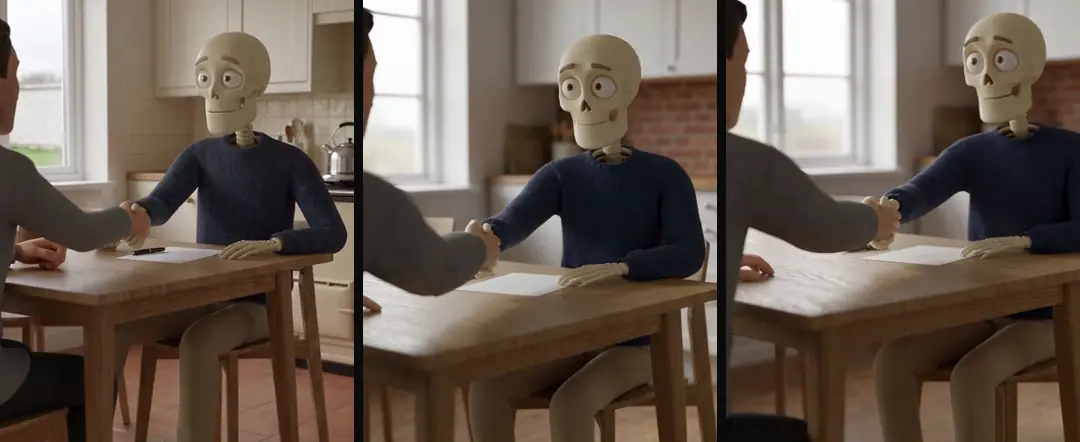
Check a qualification as a complete thought
Choose the line with the most consequential condition and ask the language editor to explain its meaning in plain words. Compare that explanation with the fact sheet. This is a suggested semantic review, not a translation score. It can reveal a qualification that survived word by word but changed scope in the sentence. Then check that the caption and visible label carry the same condition in the final localized cut.
Who wrote this We made the ads first, for SmartSolar in Denmark, Sweden and Ireland. Then we built Turntake. Where Turntake comes from
FAQ
Should I translate every sentence literally?
Localize a video ad by rebuilding the spoken explanation in the market’s ordinary language while preserving approved facts. Review the script with a language editor, test difficult pronunciation in a short sample and time captions against the final audio. Adapt footage and labels only where the new version requires them, then approve that version separately.
Which facts should remain locked?
List product names, dates, numbers, qualifications and destination instructions that must survive the rewrite. Link each material statement to its approved source. Give the language editor permission to change phrasing without changing those facts. If the source itself is unclear, return that question to the factual owner.
How do I review local phrasing?
Explain what happens, who does it and why the next step makes sense. Ask the editor to identify phrases a person would understand but would rarely say. Replace those phrases with ordinary local constructions while keeping the mechanism specific.
When should I test pronunciation?
Choose a sample containing the brand, the difficult place name and the phrase that carries the mechanism. Keep standard text and pronunciation text separately. A phonetic spelling may help a voice engine, but it should not appear in captions or product labels.