ModelsGuide
AI video hands: inspect the action before motion
Short answer
Inspect hands in the starting still before adding motion, then simplify the hand-object interaction to one clear action. Check contact, finger shape, scale, and object geometry through the complete usable interval. A cut can remove irrelevant broken frames, but it should not imply that an unshown product action worked correctly.
Fingers that merge with a lid can make a product demonstration impossible to follow. Inspect the hand, contact point, and object together before approving motion, then review the entire action. When the hand carries the explanation, a simpler shot may preserve more useful evidence than a complicated gesture that cannot be checked.
Define the job of the hand
Distinguish a hand resting beside an object from a hand demonstrating a mechanism. The first establishes presence; the second provides evidence of interaction. Write that role before choosing a close-up.
For a hypothetical folding container, the demonstration may need to show where pressure is applied and how the hinge moves. A hand that merely passes over the lid cannot establish the same thing. If the mechanism matters to the claim, real footage may be the appropriate source. Do not make a decorative hand shot carry proof it was never designed to provide.
Inspect the still before motion
In our production in October 2026, fine hand actions such as writing and counting could produce morphing fingers. We also recorded animation hands that became oversized or changed material. Those are observations from our production, not universal statements about every video model.
Check finger count where visible, palm shape, wrist connection, scale, and contact with the object. Inspect partly hidden hands as well: a sleeve that ends in an unclear shape can become a more obvious problem in motion. If the starting image already fails, revise it rather than asking motion to preserve an incorrect hand.
| Visible detail | Inspection question |
|---|---|
| Wrist and sleeve | Is the hand connected plausibly? |
| Contact point | Does it touch the intended part? |
| Scale and material | Does it belong to this character? |
| Product edge | Does the object remain intact around contact? |
Source: suggested production checklist, October 2026.
Reduce the number of interactions
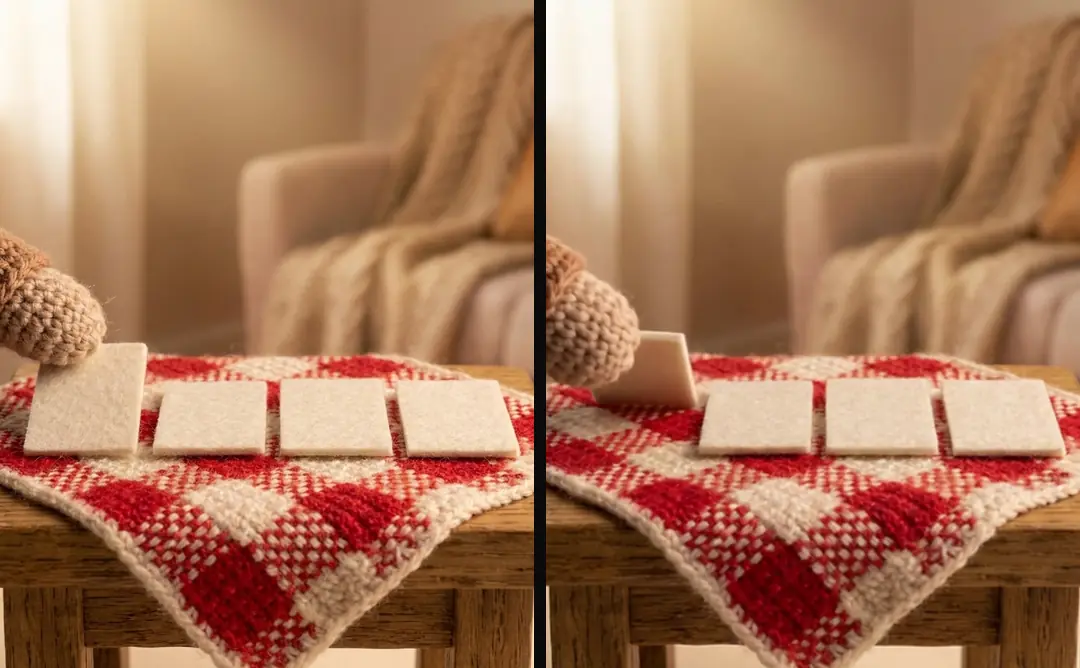
Choose one simple action for a first test. Resting a hand, placing an object, or reaching toward a clearly visible handle gives the reviewer a bounded event. Combining grasping, rotation, opening, and pointing creates several opportunities for an unclear contact.
Simplification must preserve the product truth. A shot can become easier to generate yet stop explaining the real mechanism. If the action is reduced to atmosphere, label it as illustration and obtain the demonstration elsewhere. seedance vs kling vs veo discusses broader model selection; the hand’s evidence role is a shot-level decision that remains yours.
A dispenser demonstration needs the viewer to understand which surface is pressed and what supports the bottle. A hypothetical brief therefore limits the gesture to one pressing finger and a separate supporting hand. Review contact before motion and throughout the selected interval. If a finger merges with the pump, changing the background will not repair the explanation; simplify or replace the action while keeping the required contact visible.
Keep the camera relationship readable
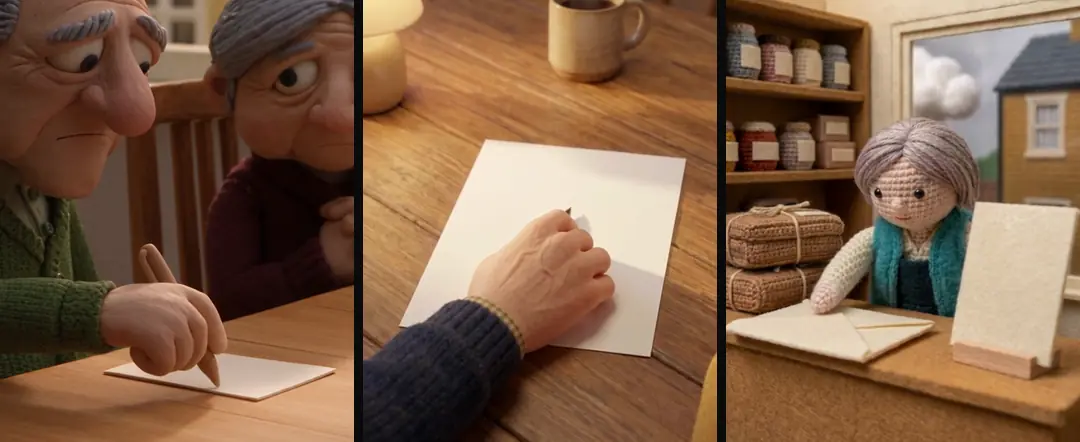
Choose an angle that exposes the action instead of hiding the critical contact behind the palm. Leave enough space to see the object’s state before and after the movement. A very tight crop may show texture while losing the mechanism.
For filmed footage, capture a wider reference take as well as the detail. For illustrative animation, a small character doing a broad task may serve the story better than an oversized hand close-up. In our production in October 2026, smaller workers in a scene replaced problematic fine hand work. That was a design choice specific to those shots.
Watch the contact interval at normal speed
Review the approach, touch, movement, and release. Pause at suspect frames, but also play the interval normally. A hand can look plausible in the first and last still while changing shape during the action.
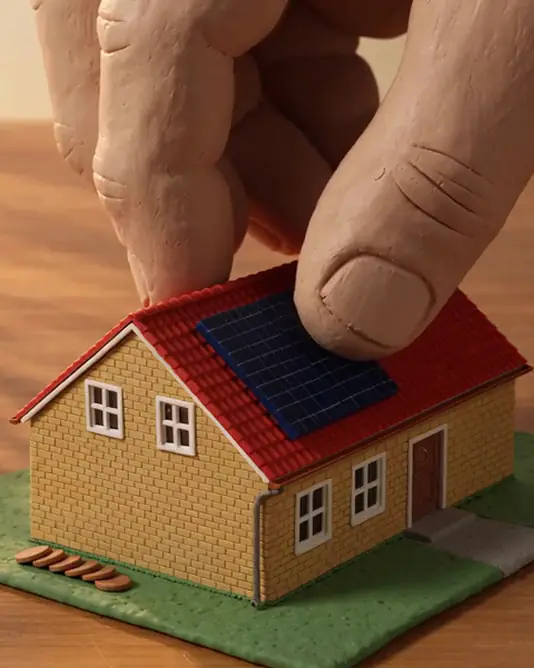
Mark the exact failure. Extra fingers, a slipping wrist, and an object changing size require different repairs. If contact is hidden for several frames, inspect the reappearance carefully. A continuity failure can emerge after an occlusion even when the start is correct. Keep the review tied to the actual selected interval rather than the source file’s thumbnail.
- 01State the evidence rolePresence or demonstration
- 02Approve the stillShape, wrist, contact
- 03Test one clear actionKeep geometry visible
- 04Review contact through releaseThen approve the cut
Choose a repair that matches the failure
Revise a bad starting hand at the still stage. Simplify a complicated action at the shot-design stage. Replace a failed demonstration with real footage when the action supplies essential evidence. A new camera angle may make contact clearer, but it is also a new candidate to review.
Avoid changing every part of the request at once. Preserve the previous still and note what the revision is intended to fix. The point is not to accumulate attractive variations; it is to obtain one shot whose visible action can support the sentence honestly and survive the intended crop.
- Illustrative hand shotEstablishes a scene or action ideaProduct demonstrationShows a mechanism the claim depends on
- Illustrative hand shotCan simplify to a broad gestureProduct demonstrationMust preserve necessary contact evidence
- Illustrative hand shotReview visual continuityProduct demonstrationReview continuity and product truth
Use cuts without fabricating a demonstration
A cut can discard a hand reaching in before the useful action, or remove an irrelevant broken tail after the action is complete. It cannot establish the missing middle of a product demonstration. If the mechanism fails where the viewer needs proof, a before-and-after cut changes the evidence.
Explain what the finished sequence actually shows. A real closed product followed by a real open product demonstrates two states; it may not show ease of opening. Keep the script within that limit. Set a voiceover word budget before the video cut helps fit the voice to the available visual evidence rather than outrunning it.
Check the final combination of voice and picture
Review the hand shot beneath its actual line, captions, and music. Choose an AI ad voice with a useful audition and Fix voiceover pacing without breaking the edit cover voice choices and pacing. If a caption covers the contact point, the approved shot may cease to explain the action in the final edit.
Keep the original source, chosen interval, intended evidence role, and review notes. Turntake’s models plan describes the planned model connection as Coming. This guide supplies a practical inspection method, not a universal model judgment or automatic hand repair. The accepted result should be a shot whose action is both visually coherent and appropriate to the claim it accompanies.
Who wrote this We made the ads first, for SmartSolar in Denmark, Sweden and Ireland. Then we built Turntake. Where Turntake comes from
FAQ
Why inspect hands in the still first?
The still defines the hand’s shape, scale, and contact before motion begins. A wrong source detail can persist or become more visible in the clip. Approve the wrist, fingers, material, and object relationship before testing movement.
Does a simpler action always solve hand errors?
No. It reduces the scope of the test, but the returned interval still needs review. Simplification can also remove necessary product evidence. Decide whether the shot remains a demonstration or has become illustration, and adjust the script accordingly.
Can I cut around a broken hand action?
You can remove irrelevant lead-ins and tails. Do not use a cut to imply an essential mechanism worked when the action itself was not shown correctly. Use another angle or real footage when the claim needs that missing evidence.
Which frames need review?
Inspect approach, contact, movement, and release, then play the complete usable interval. Check reappearance after the hand passes behind an object. A correct first and last frame can conceal a shape or continuity failure in the middle.